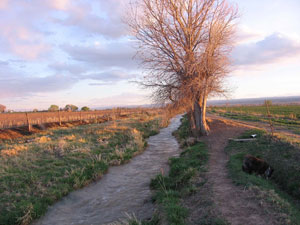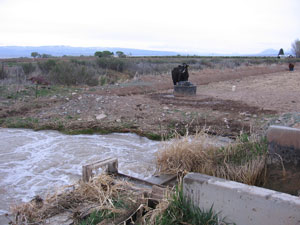
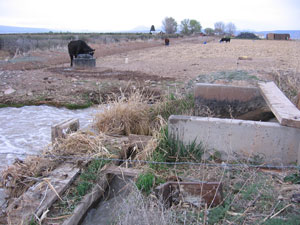
It is hard to see, but the headgate is open, and our share of the canal water is starting to flow toward our farm.
It is hard to see, but the headgate is open, and our share of the canal water is starting to flow toward our farm.
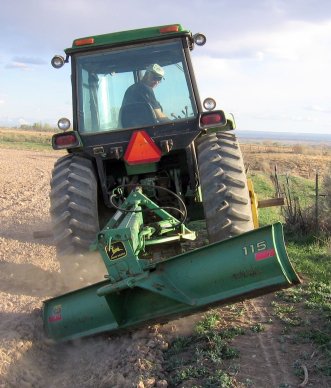
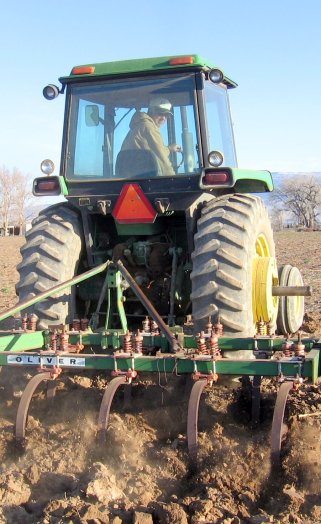
Because we irrigate the rows, they have to flow into a waste ditch. Terry is using a 115 blade to make the waste ditch in the upper corn field.
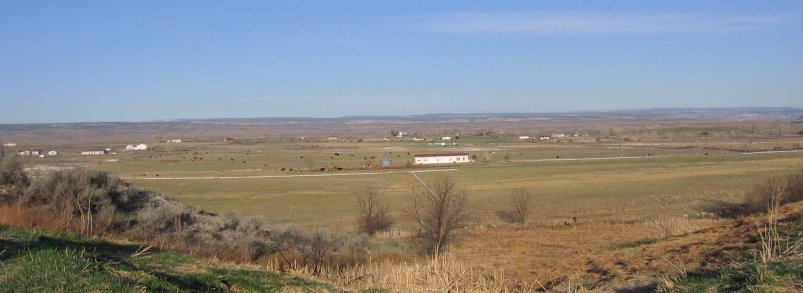
Population growth is occurring everywhere. We are seeing subdivisions popping up in unlikely places, farms disappearing, and developers from out-of-state buying up anything they can get their hands on. This is a view of former grazing pastures for cattle. These houses have appeared in the last 7 years. The view is from our equipment storage area.
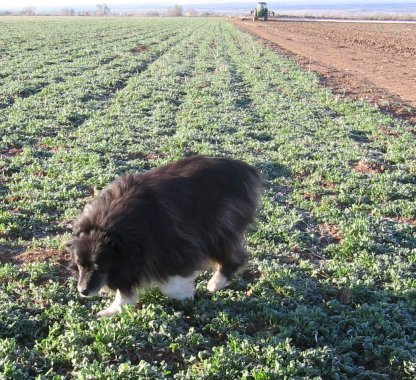
Even though the hay is growing and working the ground is in process, the frost lays down every night, but burns off by the time the sun becomes warm.
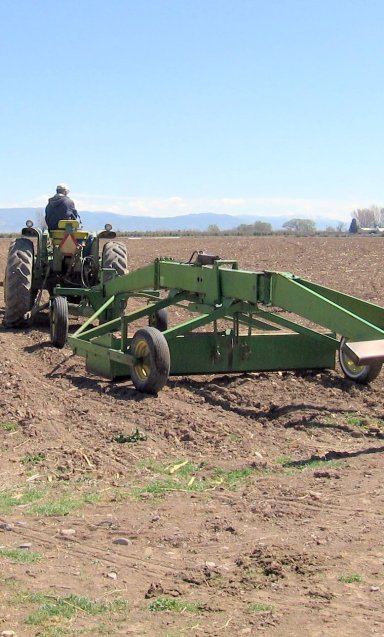
This is a huge blade like scraper, which transfers all the dirt into a flat/level field. If the ground isn’t level the irrigated rows would not move the water to the end of the field, causing the seeds to not sprout. Or, later on in the season, the water will just ‘flatten’ out and not reach the end of the row, thereby starving the plant of water.
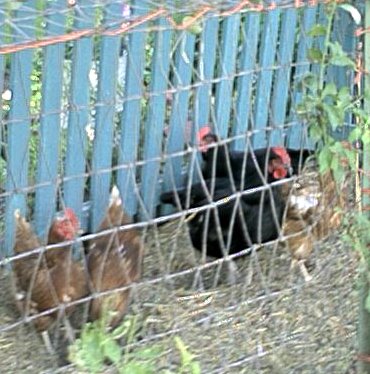
Spring makes everyone happy, even the chickens.
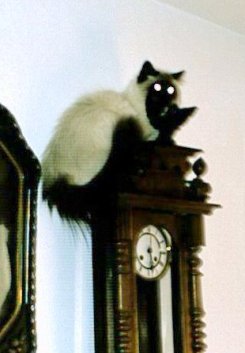
Our cat, Monkey, a long-haired Siamese, climbed the wall and tried to hide on the clock when, Balou, our oldest daughter’s Rottweiler, came into the room for the first time.