We are now flushing the ditches and the gated pipe, sending mud and dirt into the fields for one last time. If we don’t do this we will have to manually shovel out the cement ditches and have to manually scrap out the pipe in the spring.
For those of you who are just now joining us you can use the search box and type in Step One to find out more about the different steps in irrigating.
Irrigation is using the water out of rivers and streams, diverting it according to a strict metering system (through a measuring device called a partial flume) down ditches to fields. This water is usually the result of melting snow runoff, and is fully subject to droughts.
First all of the water in any given river is already spoken for.
For instance the water in our canal (prior to emptying into the Gunnison River, then the Colorado River) has owners; there are ditch “companies” along the Gunnison River and the Colorado River, each ditch supplies water that runs through private land (as opposed to National Forest or BLM).
Each of these farms has a pre-determined amount of claim to a PERCENTAGE OF THE WATER FLOWING BY. So if the canal is running 1,000 cubic feet per second and the farms, who share the ditch, are at the top of the water chain.
There is a state water inspector, called the ditch rider, who comes in and regulates the flow of water into the ditch through a head gate. He –and he alone- opens that gate and allows the proper cubic feet per second allotted to that farm into the ditch. This allows the rest of the water to remain in the canal and flow down to the ranches, cities, and towns that have claim to a share of water in the creek. And yes the amount of water (EVEN IF YOU PAY FOR IT) can and is cut back to barely making it during times of dought.
The ditch rider must insure that no one farm takes out more than their allotted share (the rights to water go in order of date the claim was made, so a newer farm, defined as new fields, or arable land–not the sale of existing land and water rights to a new owner–will be bypassed during times of drought in favor of established claims to the water based on the order received.
Then there are Cities. The Cities of Palisade, Grand Junction, and Fruita, Colorado, Moab, Utah, cities in Nevada, and Los Angeles, California, all have claim to some of the water flowing down the Gunnison River and into the mighty Colorado. Some of these claims are very old, and trump the rights of the oldest of ranches/farms.
In 1909 our water canal system was built and this year we celebrated-along with all of the Uncompahgre Water Users, water arriving on our farm (our farm was created in 1906 by Terry’s great grandparents; we are fourth generation farmers in our area.)
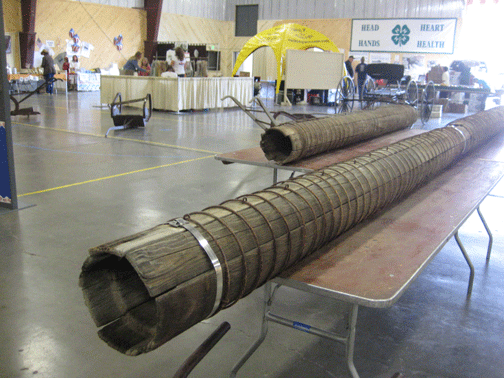
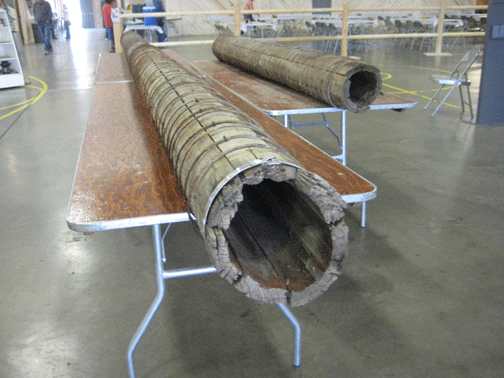
The two photos show a salvaged water transfer pipe laid in 1909.
We’ve come a long way, Baby! Ain’t it grand!
 Life on a Colorado Farm