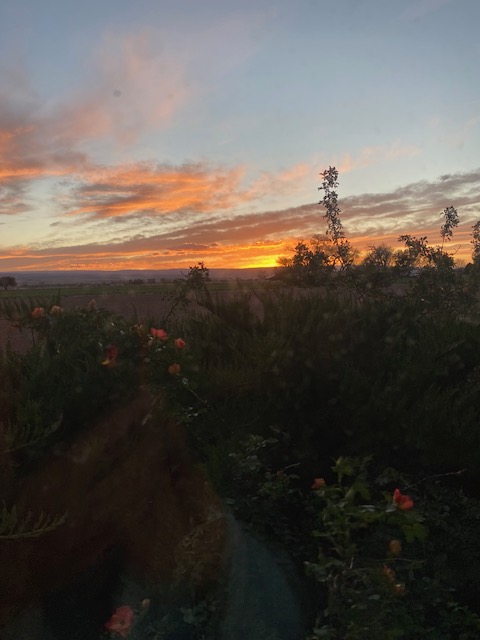
We are now flushing the ditches and the gated pipe, sending mud and dirt into the fields for one last time. If we don’t do this we will have to manually shovel out the cement ditches and have to manually scrap out the pipe in the spring.
For those of you who are just now joining us you can use the search box and type in Step One to find out more about the different steps in irrigating.
Irrigation is using the water out of rivers and streams, diverting it according to a strict metering system (through a measuring device called a partial flume) down ditches to fields. This water is usually the result of melting snow runoff, and is fully subject to droughts.
First all of the water in any given river is already spoken for.
For instance the water in our canal (prior to emptying into the Gunnison River, then the Colorado River) has owners; there are ditch “companies” along the Gunnison River and the Colorado River, each ditch supplies water that runs through private land (as opposed to National Forest or BLM).
Each of these farms has a pre-determined amount of claim to a PERCENTAGE OF THE WATER FLOWING BY. So if the canal is running 1,000 cubic feet per second and the farms, who share the ditch, are at the top of the water chain.
There is a state water inspector, called the ditch rider, who comes in and regulates the flow of water into the ditch through a head gate. He –and he alone- opens that gate and allows the proper cubic feet per second allotted to that farm into the ditch. This allows the rest of the water to remain in the canal and flow down to the ranches, cities, and towns that have claim to a share of water in the creek. And yes the amount of water (EVEN IF YOU PAY FOR IT) can and is cut back to barely making it during times of dought.
The ditch rider must insure that no one farm takes out more than their allotted share (the rights to water go in order of date the claim was made, so a newer farm, defined as new fields, or arable land–not the sale of existing land and water rights to a new owner–will be bypassed during times of drought in favor of established claims to the water based on the order received.
Then there are Cities. The Cities of Palisade, Grand Junction, and Fruita, Colorado, Moab, Utah, cities in Nevada, and Los Angeles, California, all have claim to some of the water flowing down the Gunnison River and into the mighty Colorado. Some of these claims are very old, and trump the rights of the oldest of ranches/farms.
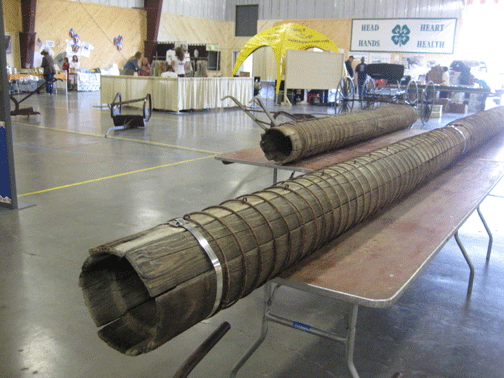
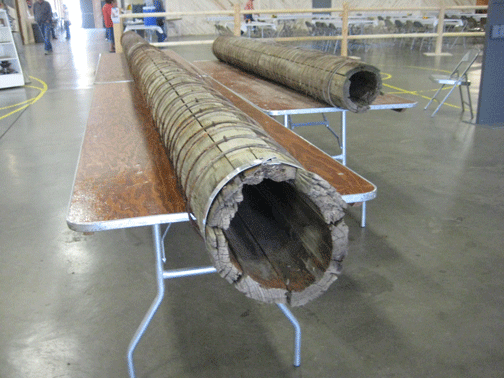
In 1909 our water canal system was built and this year we celebrated-along with all of the Uncompahgre Water Users, water arriving on our farm (our farm was created in 1906 by Terry’s great grandparents; we are fourth generation farmers in our area.)
The two photos show a salvaged water transfer pipe laid in 1909.
We’ve come a long way, Baby! Ain’t it grand!
 Life on a Colorado Farm
It IS Grand!! Thank you for being so thorough with all your explanations! I have learned so much from you.
Hugs.
LikeLike
This water thing is very complicated. When my friend was on the board of our Church Camp in Fairplay, she had to go to meetings about water and the water board and all that. I had never knew anything about it till then. I am sure there has been some blood shed over water rights. I have a different friend here near Longmont that rents a little house on a very old farm property. There has been a big war going on between the two old farmers about the FENCE. Like someone is going to go to jail over this. Crazy.
LikeLike
Maybe I mentioned the time little bro and I dammed up a small irrigtion canal to make a swimming hole. It worked great until the neighbor came by all steamed and wondering where his water was going. Dad chewed us out royally, but I think he laughed later.
LikeLike
Thanks for posting!!! That was so fascinating!
LikeLike
I just saw Pam’s comment above mine….my husband’s uncle owned a large ranch in Gateway canyon, and his Grandfather was shot over water rights. His little son Preach Massey was left to find his way down the mountain, but either someone found him, or the horse knew the way home….depends on who you ask 🙂
LikeLike
I did not know much of what you explained. Thanks! Kind of scary, living that way, never knowing if you will be getting water. It’s the price for having that lovely life out west, though. We had many droughts, and many water rationings.
~Faith
LikeLike
That sounds pretty complicated to me. But at least you have a way of receiving the water you need.
For us, we still have to rely on the rain to come….
LikeLike
I love the old irregation pipe, that is so neat. i never would have thought that they would have used boards fastened together like that. Pretty brilliant really. Great post
LikeLike
This entire series about your irrigation was so interesting. Thanks so much for sharing this Linda. What a lot of work! – it’s amazing how different life can be in different parts of the country.
LikeLike
You don’t stop to think about things like this unless they regulate your life, and farmers are regulated, as you demonstrate in your essays. When you consider the population growth of the towns and cities demanding water for citizenry and the lack of snow on the mountains due to global warming (some years at least more than others) it’s frightening.
Thanks, Linda, for putting this out for all to see and doing it in a non-biased way.
LikeLike
Very very interesting!!!
LikeLike
I have really enjoyed your irrigation series, I found it interesting and well written, I learned a lot ! Thank you for sharing your way of life, and water is one thing that we often take for granted but shouldn’t . I do so enjoy your blog:)
LikeLike
I have thoroughly enjoyed your irrigation posts. Well and everything else farming. And rainbows :-). These are a treasure. Thank you for sharing!
LikeLike
What a process!
What a rich tradition to be 4th generation on the land,
LikeLike
When we were looking at the beautiful Ozarks farm land a lot of the people also buying farms there were from Colorado and it was because of water. It’s really hard for me to grasp this concept. We have running water all year long from our very own mountain spring and it’s the water we drink and use every day. It comes straight from the top of our mountain to us. I just think of all the problems farms face and water would be huge.
Most interesting stuff Linda all the time and I really thank you for sharing it with us.
LikeLike