From the Past
Compiled from Delta Newspapers by the Delta County Historical Society
251 Meeker Street, Delta, Colorado, 81416 (970) 874-8721
From the Delta County Independent
August 22, 1913
During a heavy thunder shower accompanied by frequent flashes of lightening in the Cedaredge district last Thursday evening, one of those sharp flashes connected with stacks of hay on the farm of Dr. H. K. Gibbs and soon all was a solid mass of flames.
There were spectators to the lurid scene, it is reported, but nothing could be done to check the blaze and in a very few moments 110 tons of hay, one or more sheds and considerable fence, was in ashes. The loss is conservatively estimated at between $800 and $1,000.
The residence and other buildings on the Gibbs farm were at sufficient distance from the fire to escape unscathed. Mr. Gibbs many Delta county friends and acquaintances will regret to learn of his misfortune.
This is something we rarely hear about anymore. Although, when I was a child I remember playing in our front yard when our neighbor across the road had one of their three haystacks burst into flames.
Everyone close by rushed to help Mr. and Mrs. Shock put out the fire, but nothing could be done to save the three haystacks. By the time the Cedaredge Fire Department arrived all three stacks were on fire. Cedaredge is a good 20 minutes from where we lived so the time it took to call the operator (yes we still had telephone operators back then) have her alert the volunteer fire department and personnel, for everyone to arrive at the station and then drive down there a goodly amount of time had past. A goodly amount of time.
Momma watched with my brother and I while all the men did what they could. When questioning her “WHY?!?!” She explained that the hay stack had gotten so hot inside that the fire started, which was a amazing thought to a small 6 or 7 year old.
Gradually I began to understand that when hay is stacked up still wet (or too fresh or too green, however you like to think of it) the heat will build until a fire will self-start. A fire like that is called spontaneous combustion.
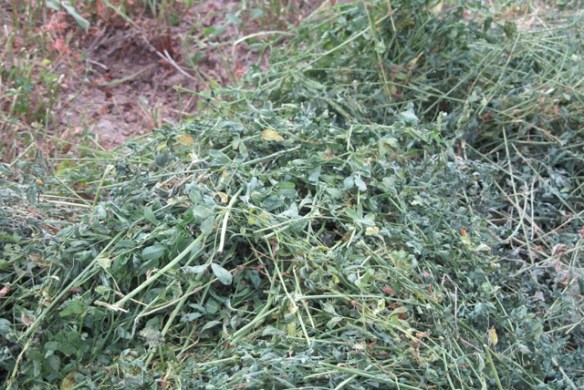
It was an amazing site and one that still stays with me even now. Terry is very, very careful to never put up hay that is too wet for just this reason. Also wet hay can mold, which is not good for animals to eat causing many air born and other illnesses. It’s a matter of timing for good rich hay complete with the little leaves still attached to the stem. The little leaves are the rich source of protein perfect for maintaining good health in animals.
Today is groomer day for the dogs…I’m sure Fuzzy isn’t going to appreciate where we are going. But he will enjoy the ride (until we get there, that is!:))
Your friend on a western Colorado farm,
Linda
 Life on a Colorado Farm
When I was a kid fires were always a threat at a nearby dairy and at all the hop kilns in the late summer. The dairy burned three times, I think, all a result of alfalfa baled just a little too green. There were only a couple of kiln fires, which I find amazing now that I look back, because the kiln fires were usually attended by old guys who were often drunk. Thanks for the memories of volunteer fire departments, my dad was fire chief for a while, so our family was always in the middle of the excitement. My brother and I had fun playing on the truck when it was parked in our yard.
LikeLike
How much value would 110 tons of hay be today?
I had totally forgotten about the Shock’s hay stack fire…took a bit. You have a remarkable memory.
I should interview you for a history of our childhood! I was thinking about trying to write that down someday (no time now). 3 years to retirement (maybe 4)
d
LikeLike
it always worried me, too – especially with hay mows in wisconsin dairy barns.
LikeLike
I’ve heard of this, but have never witnessed it. That would be devastating.
LikeLike
Funny that you are writing about disasters here as I came by because I just now realized that my note thanking you for sending those flood pictures came back (I guess I still have your wrong e-mail address). Bill and I both were grateful for the link. Thanks!! So heartbreaking, but that magazine did a great job of covering it.
LikeLike
Love these old stories. Our local little paper publishes the “files for the past”. $800 – $1,000? Amazing! Their livelihood , up in flames. A few years ago the neighbors hay stack went up in flames. Its quite spooky.
Have fun at the beauty shop guys! 🙂
LikeLike
I always marvel at how much knowledge a farmer has to have about every stage of farming. A burning haystack. Who knew?
LikeLike
I remember that happening up in Iowa where I was raised, also. Now it can also happen to the big cotton modules! They have 2 foot long thermometers to put into the module to check the heat. It is amazing what all must be considered when putting crops up.
Sorry for the haphazard commenting lately…blessings to you and Terry
LikeLike
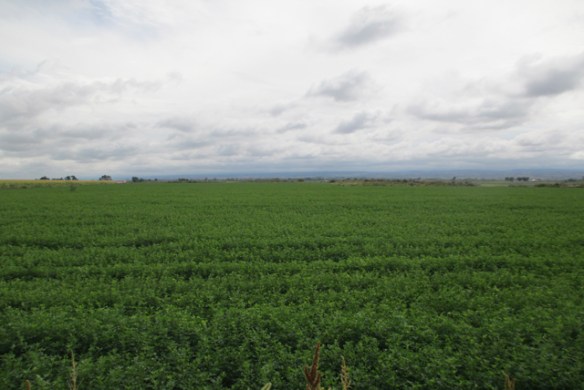
Up here the haystacks were usually spaced apart for that reason and ease of feeding cattle I think. Hay Mow fires were something that was really scary, spontaneous combustion and lightening strikes. When we had the greenhouse we used to space out our bales of peat media inside, because it can combust too. Most was stacked outside nd brought in to unfreeze before using. Your alfalfa looks nice:)
LikeLike