September 12, 1913
The Grand Mesa Resort Company has let a contract to complete the road to their resort on Grand Mesa. They expect to have the road completed this season and be in readiness for the stockholders and others to enjoy the pleasure of this wonderful resort next season.
The Grand Mesa Resort Company has let a contract to complete the road to their resort on Grand Mesa. They expect to have the road completed this season and be in readiness for the stockholders and others to enjoy the pleasure of this wonderful resort next season.
For those who are interested in history of Grand Mesa, Mr. Wetzel has put together the following bit of information.
Enjoy!
Your friend who loves history,
Linda
THE GRAND MESA FEUD
In early 1886, William Alexander came to Grand Mesa, though it was two years later that he took up a 160 acre preemption near a body of water soon to be known as Alexander Lake. He lived there for 4 years and then mysteriously disappeared. While on Grand Mesa, he had a partner, Richard Forrest. Forrest Lake is named for him. Alexander and Forrest built a hotel and fish hatchery near Alexander Lake in 1891, and began a resort business within their claim for fishing and raising trout. Their holdings included portions of Alexander, Hotel Twin, Eggleston and Barren Lakes
In 1886, the Surface Creek Ditch and Reservoir Company (SCD&RC) contracted with Alexander and Forrest to assist the Company in locating and constructing dams for the Surface Creek irrigation system. The stockholders of the SCD&RC retained the right to fish in the lakes. The public was also allowed to fish in these lakes with no restrictions.
When Alexander disappeared in 1892, Forrest succeeded to his partner’s rights. In 1896, Forrest sold the 160 acres of land and the fishing rights to an Englishman named William Radcliffe. Radcliffe was an avid fisherman and sportsman. As soon as Radcliffe obtained the property, he immediately sought to exclude the public from fishing in his lakes without a permit. The public resented this change of policy. Stockholders of the S C D & R C were antagonistic. They considered their fishing rights equal to Radcliffe’s.
Radcliffe was supported by the Colorado Fish and Game Department in his feud with the public. Then, in 1899, the Colorado state legislature gave to individuals the right to lease public lakes, so Radcliffe obtained a lease to the Alexander group of lakes for $145 which permitted him to sell fish and exclude the public from his premises. Until this law was passed, his right to the lakes was largely a moral one.
But the public continued to fish in his lakes as they had before. As a result, Radcliffe hired a number of guards, all of whom were deputized as game wardens under the state Fish and Game Commission. Feelings against Radcliffe were high!
On Sunday afternoon, July 14th, 1901, William A. Womack and four of his ranch-hands of Surface Creek Mesa were at DeepWardLake where they had intended to go fishing. They were soon confronted by Frank Mahany, a rather hot-headed game warden employed by Radcliffe. Mahany threatened the five men–as they were planning to fish without a permit. The anglers then went over to IslandLake, where they were met by Frank Mahany, again.
During this second confrontation, Mahany’s anger got the best of him. He pulled his revolver and fired at Womack and missed. Womack immediately jumped off his horse and put his horse between him and Mahany, as a shield. Mahany then fired at another man, hitting him in the leg. Womack’s horse shifted, leaving him exposed. Mahany emptied his gun at a range of about 25 feet. One bullet went through Womack’s leg, and another lodged in his chest. (He died that night at about 10:00 p.m. before a doctor was able to reach him from Delta.)
After the shooting, Mahany went home to his cabin across the lake, and with his wife and another game warden, sat out in front of the cabin to keep watch. Mahany was getting concerned, so he left on horseback for Delta–taking a seldom used trail. Soon after he left, about 25 armed men arrived looking for the warden. Mahany arrived in Delta about 8:00 a.m. and turned himself in to Sheriff George Smith. Mahany was placed under strong guard in the courthouse and Sheriff Smith and several others left for Grand Mesa to investigate the shooting.
As the day progressed, many horsemen arrived in town, and fearing a raid to grab the prisoner for some “western justice”, Mahany was secretly moved to the Smith ranch several miles from town. Just after midnight, about 150 armed men broke into the courthouse looking for Mahany. Not finding him, they checked the jail and every other place in town when they thought he might be hidden. The search continued until about 4:00 a.m.
Later in the morning, two deputies took Mahany to Olathe where they boarded a train for Gunnison, to place Mahany in the safety of a Gunnison jail. Mahany was tried there and convicted of voluntary manslaughter. He was sentenced to eight years in the state penitentiary. He only served two years.
That Tuesday night – two days after the killing – about one hundred armed men rode to Alexander Lake and ordered all of Radcliffe’s men to pack and leave. They did. After they had gone, the mob tossed a lit kerosene lantern into the hotel and burned it to the ground, along with some of the nearby cabins.
Radcliffe was away on business when this all occurred. He was informed of what awaited him if he returned on the train, and he never returned to western Colorado. About 1911, the Grand Mesa Resort Company purchased the interests of Radcliffe. They incorporated, sold shares at $50 a share, built a new fish hatchery, restocked the lakes, and improved the main road.
Radcliffe, via the English ambassador, sued the U.S. Government for $65,500 to reimburse him for the damages to his property. Eventually, he received $25,000. William Radcliffe died in Kent, England in 1938 at age 81. His difficulties on Grand Mesa resulted from his inability to understand the people of Delta County and their inability to understand his English ways.
What really happened to William Alexander? His mysterious disappearance occurred in 1892, shortly after purchasing a new saddle at George Wilson’s saddle shop in Delta. Years later, in 1906, a skeleton was found in a shallow grave about two miles west of Cedaredge, near where the old road was. There was no positive identification. Some speculated that it was Alexander, and that he was killed for the saddle. Others thought he was killed by his partner, Richard Forrest, because Forrest had previously sued Alexander over some money owed him. This fact was widely known, but it was not proof of murder. The mystery of his disappearance was never solved.
Jim Wetzel
Note: In early 2011, Jim Wetzel published a book regarding the 1901 incident on Grand Mesa, titled: “Murder and Mystery on Grand Mesa / A Fishing Feud Begins.” Copies of this book can be obtained at the Delta County Museum, 251 Meeker Street, Delta, Colorado 81416.
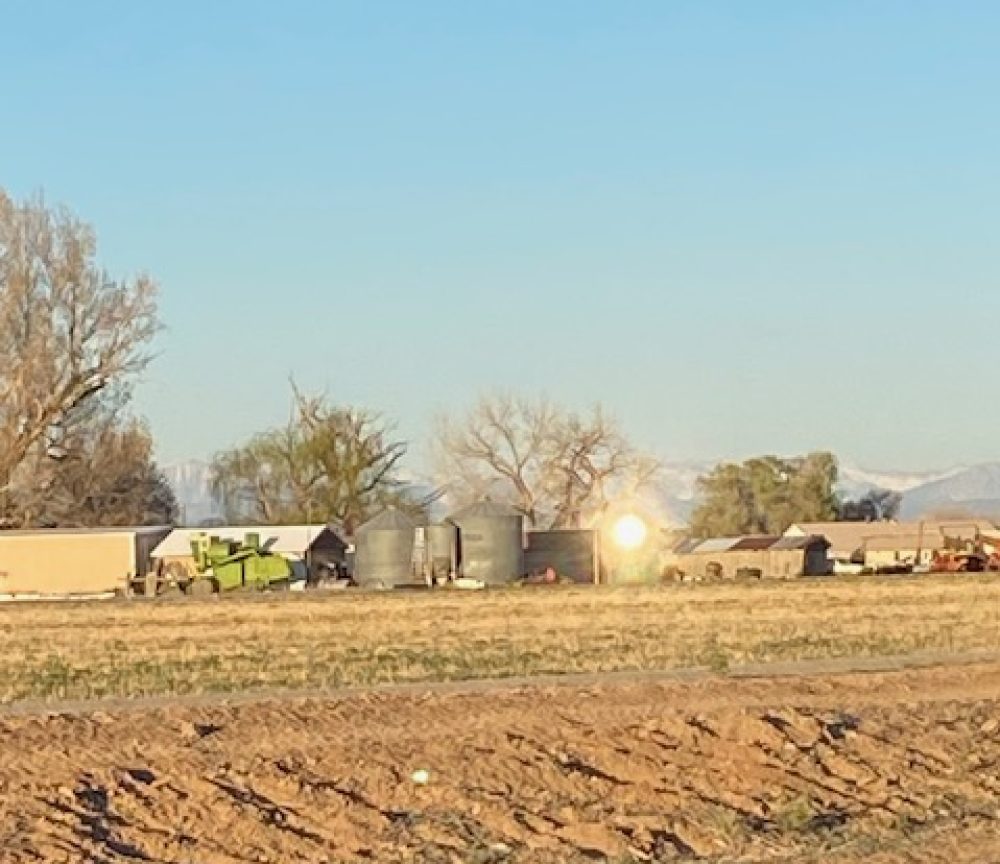

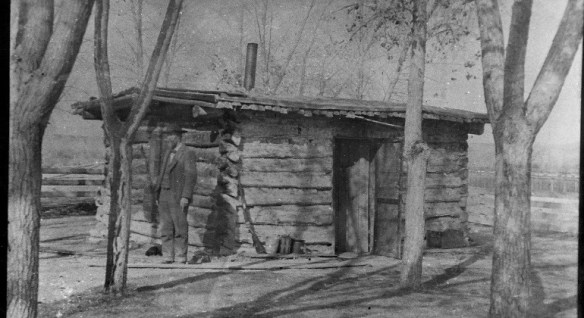
 Life on a Colorado Farm