Way back here I promised to show you the photos and tell you a little bit about the Diversion Dam.
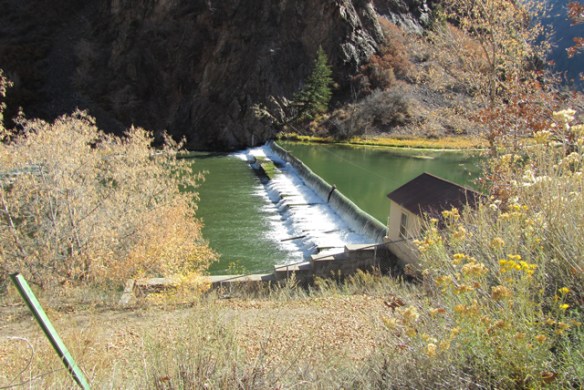
The Diversion Dam is where our irrigation water starts (and out potable water for our homes) out of the Gunnison River flowing through the Gunnison Tunnel. This is the dam and the little house is sitting over all the ‘workings’ that move the water from the Gunnison to farms along the Uncompahgre Valley (Un-come-pah-gray…accent on the pah). We live in the lower part of the Uncompahgre Valley…the irrigation water starts flowing through farms in Montrose, then Olathe and finally Delta. The water is used many, many, many times before it flows back into the Gunnison River on it’s way to California, Nevada, and Arizona. Water in our neck of the high desert is not wasted. Water in Colorado protected by law…we can not even catch rain water as all water must be allowed to flow back into the land. This link will show you other people’s photos of the dam and the tunnel.

Anyway, our water starts at Taylor Reservoir flows into Blue Mesa Reservoir and then starts it’s way down the Gunnison to Delta, through the Black Canyon.

Only a portion of the river is diverted at the Gunnison dam. The above photo shows you the water flowing onward after the dam.
 The Uncompahgre Valley Water Users manage the water with senior water rights on the river. This house is where the people live who take care of the Dam and the tunnel on this end of things.

The Uncompahgre Valley Water Users and Delta Montrose Electric Association combined forces to start a hydro project on the canal…
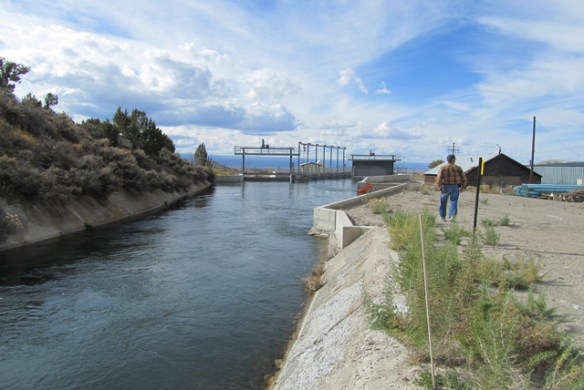 You are looking at the gate that takes the water to the hydro.
Water…always a fascinating subject for me… Since I grew up at the foot of Grand Mesa (my father and grandfather had big orchards) water was always a topic of discussion. After getting married to a farmer we continued the water discussion …the one of — is there enough to farm with this year? Always a concern.
Anyway, I hope you enjoy your short trip. It’s always a treat to take people to see where the ‘water’ comes from, water for drinking and for irrigation in our tiny spot of the world.
You Western Colorado Friend,
Linda




 Life on a Colorado Farm