Last Day of April

We had 84* yesterday…unheard of for April…that is more like July temps.  By this evening a storm will be here (complete with 40 m.p.h. gusts of wind) and rain showers.  It must be a fast moving storm as by Thursday we will be calm and settled once more.

The other thing with the storm is the temperatures are supposed to drop into the low 60s* and freeze.

We will see freezes from now until the snow is melted off  the point on Grand Mesa….

Any who…I sure am enjoying all of this…the little Robin’s are waking up right after me and singing the day awake –I hear their cheerful little songs starting around 5:15.  Lifts my heart up!
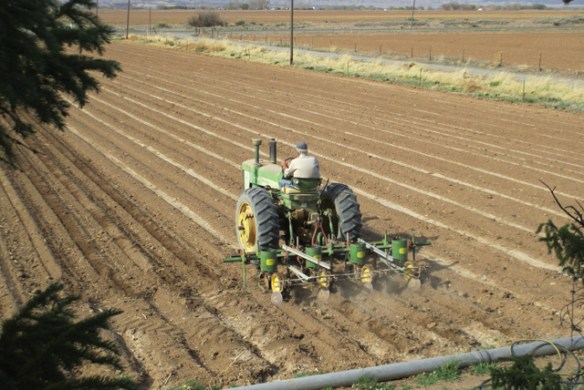
Planting-Corn

Terry is planting corn, in five days he will harrow the rows down so the little stalks can come through, then he will mark it back out and we will start water on it again.  We have to be careful on when to start the water back up, if the seed is in one certain stage and you put water on it  the seed will die and rot away.

Timing is everything.
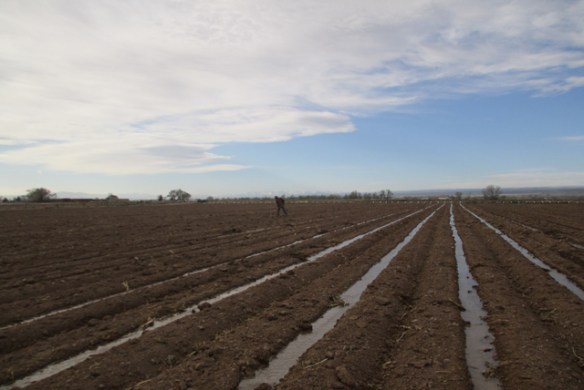
Walking-water

We go out early, early and irrigate.  We are in a field that has extremely long rows (think half a mile) which requires us to walk the water through…meaning we have to make sure the trash doesn’t plug up the furrow causing the ground to sub over before the water makes it to the end of the row.

We start the tubes and then start walking the water.
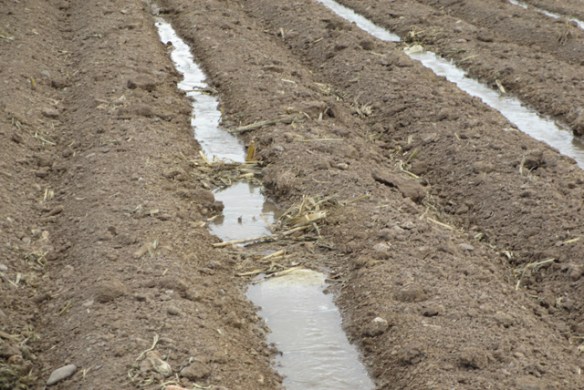
Trash

We are doing this three times a day, early light, 1 p.m. and then at 7:00 in the evening.
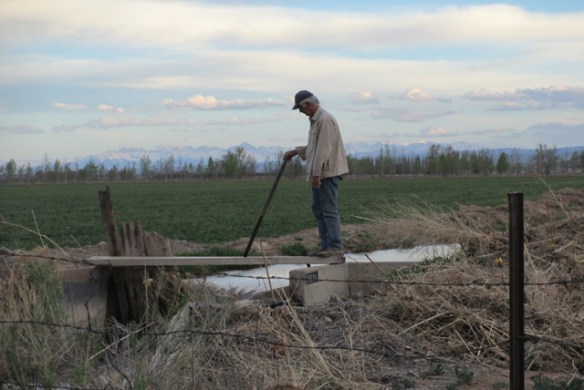
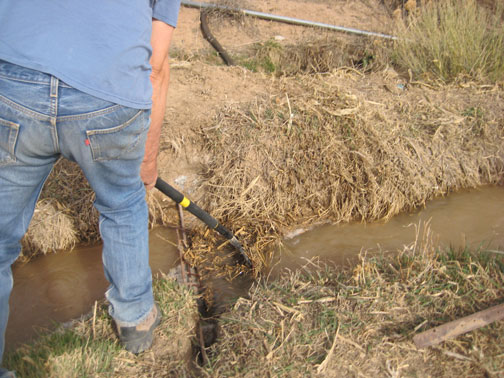
Cleaning-the-head-gate

As time consuming and tedious this is I actually enjoy it.  Which is a good thing, because I do most of this while Terry goes to the head gate (I’m rather afraid of the head gate) and cleans trash along the way.

Works out for both of us!
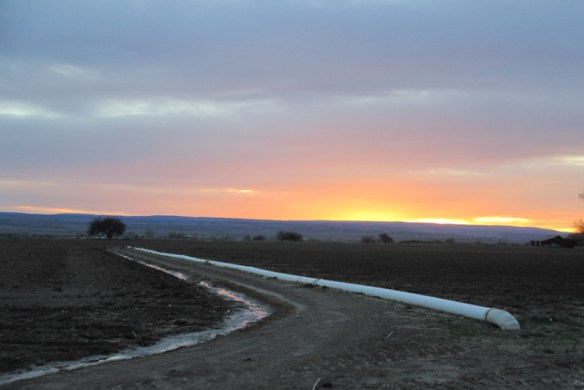
Sunset-1

Have a lovely end of April day…tomorrow we will start MAY!

Linda

Step 7- Starting the Irrigation Water

utah-wind

Before we could begin a big wind storm from Utah hit our area bringing with it 45-60 mile an hour wind.   

Step 7 has many, many parts to it:

1.     Call the ditch rider so the water can be turned into your head gate.  This is the amount of water you are allotted per season.  You can NEVER go over this amount, but they can cut you short of your amount because of drought.  You still pay the same, whether you get your full amount or not  (and water here, costs more than the taxes on the farm.)

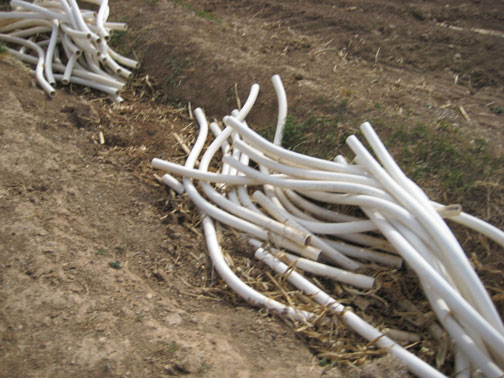
2.     Gather up all the siphon tubes and lay them out in the correct pattern

picking-up-tubes


 3.    Turn the water down the main ditch artery for our place- once it is turned into this ditch, that ditch will always have water in it until the end of the growing season.

4.     Although we cleaned the ditch (by hand-called digging out the ditch) the really messy wind had filled it back up with trash

cleaning-the-ditch1

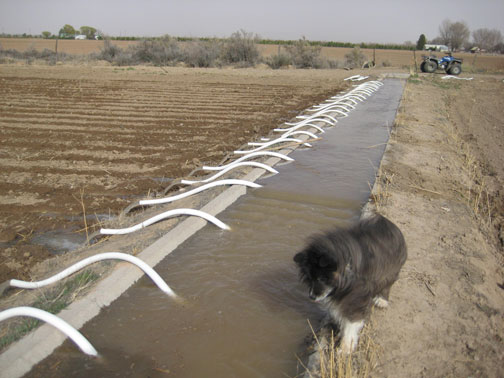
5.     Set the tubes.  This requires a siphon like action.  I have to put the tubes in the ditch, cover up one end and then hurry and spill it over the side. 

Terry just walks along and covers one hand over the end, pumps two times and drops the tube in the furrow.  I take forever; he is done in a short time.  THEREFORE I set the tubes in the furrow, while he siphons the water into the furrows. We try to have enough tubes that once they are set we don’t have to pack them again. But every year we have to replace tubes as they wear out or get broke.  Some years we just pack the tubes as that is a cheaper way to go. 

Depending on the field there are about 30-40 tubes per field.  It also depends on the amount of water in the ditch.  Sometimes we double tube, but that is later on in the season.

setting-tubes


6.     The water is moved after the proper amount of ‘subbing’ has taken place.  And the water has made it to the end of the field.  Usually about a 12 hour set.  But when water is short it is moved every 8 hours, day and night to get it through all the crops.

wind-in-fuzzys-fur1

Fuzzy loves to help, he spends lots of time barking at bubbles, trying to catch sticks and sometimes jumping in and wading. 


7.     The irrigator has to follow the water down each row, making sure it doesn’t plug up, sink in a hole, cut over into another row until it gets to the end of the row.  5 acres is a job, 30 acres a pain, and 50 acres horribly hard.  We farm 80+ acres.  The water only has to be walked if the leveling job is not good (that’s why I say it is an art form).   Then we only have to walk until the row is imprinted with the memory of the water, after that it is sealed.  BUT….once Terry cultivates we have to start over again.  Then when the crops get too big to get the tractor through the field the water just has to make what way it can, hopefully the imprint is firm and we don’t have to worry.

Maybe you can see the subbing taking place in the below photo.


water-in-the-furrows

There is more, but this gets the water started for the season.