Unknown's avatar

About Dayphoto

My name is Linda Brown. I live on a farm on the western slope of Colorado, in the high mountain desert. I’ve lived here all my life, hailing back four generations on my father’s side. Today I blog about our farm, the everyday activities that keep the farm going. I also write about my thoughts and dreams and goals. On Friday’s I always write about TLC Cai-Cai. Our sweet kitty who helps keep the farm safe. And Boo Berry Betty, a breeder dog learning to be a Farm Dog! The lovely thing about blogging it opens the world up for all of us to reach out and meet people from many different cultures and different ways of life. You can find me every day (but Saturday) at https://coloradofarmlife.wordpress.com/ Your Friend on a Western Colorado Farm, Linda Brown

Bladen Fox McCormick

blade-and-soccer

Blade is such a hardy little fellow. And so completely up for any challenge.  He finished the soccer season

soccer-and-blade

And is now trying to learn how to set tubes, he can do the gated pipe as long as we are there if something doesn’t work just right.

blade-sets-water

 His little 7 year-old hand is just not quite large enough to cover the end, but after many tries he got the aluminum tube,

second-tube

And then the really, really hard ‘white’ tube.

watering-beans

Blade’s tube set!

fuzzy-irrigates

Fuzzy thinks he is lots of help, but I wonder.

Happy 65th Birthday!

terrys-65th-birthday-018

And of course it always helps to have HELP in blowing out lots of candles.

terrys-65th-birthday-019

Living With Livestock

bull-pen1

The bulls are not allowed to run with the cows year round, for lots of reasons (according to what we have found out)-they lose interest, the cows don’t want them around (they are busy munching and growing babies), and the bulls get bored and start tearing up things. 

So the bulls go to their own pen. 

Interestingly enough bulls will not fight or get territorial if there are no cows around.  They hang out with each other, smoke cigars, tell dirty stories, eat, drink lots of water, and in general just have really good guy times.  It when those cute dames get in the picture that the whole male thing takes place.

roo-helps

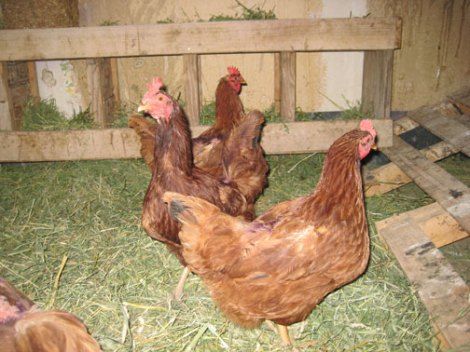
Anyway, I had to tell you that story so I could tell you about my rooster, Roo. What a bird!!!!  He is wearing the girls’ backs out and their poor little heads are in bad shape from his very sharp beak.  I am in the process of making them aprons so their backs can heal.  It is because of Roo busy activities; that every morning, just as the day is starting, Roo goes out into our yard, the chicken answer to the Bull’s pen.  He spends his time hang’n at the fence making really pretty talk to girls trapped inside the chicken pen and dreaming about all those delightful girls…ahhhhhhhh.

About 5:00 in the evening I let out all the hens so they can have beauty baths, run and stretch their feet and wings, and eat yummy things in the yard and fields.  Roo loves having the girls FREE AT LAST!  Does his little court’n dance and ….well, we won’t go there.

When I’m outside working in the yard he comes to help me, he scratches at the dirt, talks about the bugs and worms he finds and in general makes himself a regular pest. 

helping-roo

Now, this isn’t a comforting as it sounds, because ROO has attacked DH and last night our son.  So I’m not sure of Roo’s days here, we have grandchildren who spend lots and lots of time with us and they come first!

Roo and I had a BIG discussion one day, early on, and he is a bit afraid of me.  He wears his scars well, better him than me.  I have a very, VERY healthy respect for him and keep a big stick by my side at all times.  Still I am not sure of his future, I could come home one day and he may have finished his life here on earth.  Until that time Roo will head to great outdoors, help Fuzzy guard the house, help me work in the yard, and sit on the fence dreaming.

Mormon Creasing — Step 11

morman-creasing-the-corn

A Mormon creaser is a type of marker.  It not only marks out the furrow, it also flattens the rows (slightly packs the top of the rows) making a better environment for the little seeds.


This is an older photo; I wasn’t able to get one today, of DH backing the tractor out with the Mormon Creaser attached.  It has a long flat bar with shovels attached.  


Even though you are seeing the process for corn, the same steps exist for the bean ground.  Alfalfa will be planted with oats as a mother crop and has slightly different planting steps.  Not a lot of difference, but some.  For instance, Mormon Creasing is not used on grain or alfalfa fields, but a broadcasting method. 


racoons


One of the fun things about working in the fields is you get to see lots of wildlife or evidence of wildlife.  Raccoons like to wash their food in the ditches, we have lots of ground birds that lay their eggs in the fields, and every once in awhile I get to see either a fox or a coyote.

killdear-nest


This morning, while coming back from a head gate, a beautiful red fox ran alongside of the dog and I on the four-wheeler.  OF COURSE I didn’t have the camera, because I am always afraid I will drop the darn thing in the water.  But it was thrilling anyway!  Thrilling for the dog, he whined and barked, probably gave the fox a huge fright, and thrilling for me just to be so up-close-and-personal to the fox!

Step Nine-Planting

Finally we have moved to step nine-planting.  We are ONLY planting corn, right now.  We will plant alfalfa and wheat in two weeks and pinto beans in three-four weeks.

step-nine-setting-up-the-pl

Terry wet plants, which means he waters the ground first, lets it dry some, then when the moisture is just right (it can’t be muddy) he plants.  Other farmers in our area plant first and then ‘water the plants up’.   You can see the moisture in the rows.

step-nine

Terry planted on Saturday, by the next Saturday he will be able to Mormon crease it, then in 10 days from the date of planting the little corn seeds should be showing growth. 

That will be the time to harrow off the tops of the furrow.  If a person DOES NOT harrow off the tops the little plants have a hard, hard time pushing their way through the soil.  When four leaves appear (which happens VERY FAST), he will mark out the rows again and we will start water on the field.

We started water in the earth ditches last night. 

 I just want to show you how we irrigate out of earth ditches.  First you have to save the earth ditch (the pounding of the water will create a huge hole) with a protective dam.

saving-the-ditch

 Because the earth soaks up the water as it flows along, you have to turn more water down an earth ditch than you do a cement ditch or gated pipe. 

head-of-water

 In the ‘olden days’ people used mud dams, but today we have the wonder of orange plastic dams.  YEAH!  It’s hard enough to dig out ends (the end of the furrow) without the pain of building a mud dam.

earth-ditch-dam

To leave you with one of the spring pleasures, wild asparagus!  Yummm, every evening we have asparagus in some form, raw in salads, roasted with lemon sauce, boiled, over toast with white sauce….  

 asparagus-on-the-ditch1

Hooray! They are Home!

evan-comes-home

What a long trip for Terry and a coming home for Evan.  They rolled in about dark Tuesday night, making it one day sooner than originally planned.  They had at first thought about going through Texas, into New Mexico, but instead cut through the panhandle of Oklahoma right into to Colorado.

Boy was I ever glad to see them!

terrys-home

Irrigating worked out fine, I only had two horrible problems, the head gate broke, (just before the guys got home) and a pipe split, but I was able to work around both of them.  The head gate had to be fixed by the ditch company, but wire held everything together until Terry could talk to the Ditch Rider. 

Now I am just back to being the back-up farmhand.  This is good, real good.

hangn-with-grandpa

And the granddaughters get to help by riding up to Grammy’s for a visit.

It won’t be long now until Bladen is out of school so we will have two helpers when we irrigate.

Big sigh of relief!

On a Fast Plane and Step 7 (By Myself)

through-the-gate

DH left at 6:00 a.m. on Saturday. 

After a day of visiting, and making sure everything is packed (rider truck, pulling a large camp trailer- Dodge Truck pulling a trailer) they left early Sunday morning.  

At the time of this posting they are now drawing close to Oklahoma City, Oklahoma.

IN THE MEAN TIME

fuzzy-helps


The last photos I wanted to show you of irrigation are the photos of the head gate.  The magical (scary), roaring, thundering, (frightening)  place where the canal water enters into our farm


head-gate


This is the head gate!  And that little slit is the amount of water we water with all year. 


head-gate-water

Although, you’ve seen the siphon tube set up, you are now looking at MY siphon tube set up in the 25 acre hay field.  I wanted to show you this because hay is watered with every furrow, while corn is every other row.

This field’s rows are so long it takes three tubes per row to propel the water to the very end.

siphon-tubes-my-set


And so you know what an imprinted row looks like, you will see that it is sealed over making it easier to get the water down the next time. 

Once the field is cultivated we have to start over getting the rows to seal, yet let water through.  This is a circle= water, cultivate, water until the plants are too tall, then we just hope the seal holds and the water makes it to the end of the furrow.  It usually does, but if we have a horrible drought and the water is cut back sometimes ….


 imprint


Fuzzy and I are doing okay.  We had a pipe split, but DH can fix it when he returns.  Until then we will just move the water to another field and water something else.

smiling-dog


Saturday

making-a-ditch

Saturday my husband leaves for Macon, Georgia, to help our son move back home.  This is a good thing for us, but it will entail lots of hours of driving.  While he is gone I will be responsible for changing the water, feeding the animals, and keeping wood in the fire. (Maybe it will warm up and I won’t have to worry about that part.)

I have a few more step 7 photos, but I need to take them first.  Then Step 7 will be complete.  Irrigation lasts until October, but setting the water up for the first time, takes lots of work.


dirt-ditch

We still have a few dirt ditches, which have to be cleaned out every spring and when they sand up, cleaned out again and again, until the water is turned off.

And we water our pasture out of an earth ditch. 

One thing about farming, you get to use big equipment. 

earth-ditch

Here is how the gates are opened from one ditch to another on our place.

gate

The orange dam is how the water is stopped from going down another ditch.  (The ditch you aren’t using at the moment.) 

Irrigation—Continued (Step 7)

spring-trash

Trash!  Trash is a BIG deal, and this year seems worse than other years.  Mainly because of the wind!  I like the wind; I like the fact that the wind is one of our helpers in that it brings the leaves to the tops of trees.  But I don’t like the wind for all the trash and weeds that blow along with it.

Then you couple wind and trash with water (which sinks all the trash) you get a mess!  And if you aren’t diligent you will get ditches that are stopped up enough to flood whole fields.

So every couple of hours YOU MUST GO CHECK THE DITCHES for messes like this one!

Look closely and you can see bubbles (white foam) and the each of the cement ditch, which means that we don’t have enough gates in the gated pipe open and a build up is about to occur.  The build up means the water flows over the side (NOT GOOD) and creates another mess.  We don’t like those types of problems.

imprint-of-water-005

This photo shows you success.  The water made it all the way down the 25 acre field to end of the field.  YEAH!!!! The furrow with the water will form a crust that will make the water flow down better next time.  Imprint the row.  This is good.  This is the goal.  To get the water to seal the row, but at the same time provide enough moisture to sub across to the next row!

You will notice that every other row has the water in it.  That is the way you water corn, every other row.  So this field will be planted to corn in about 10 days. Beans and hay are watered differently.

tallin-and-grandpa

Talli used a stick to help dig out the trash.  She called it her shovel.

The grandkids like to come out and help irrigate.  Blade and Linkin were way down the row digging out the stuck corn stalks and other bits of trash but Tallen stayed with us.


helping-grandpa