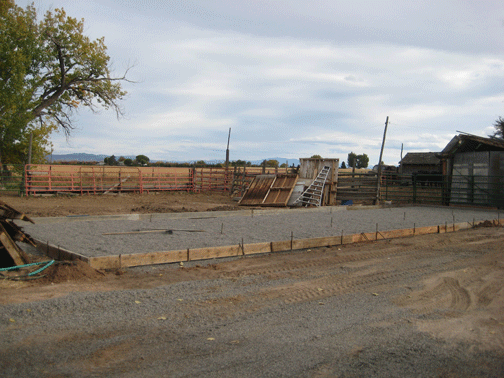
We are moving right along on the barn

In-between harvesting the corn and hauling hay-
And the bad weather
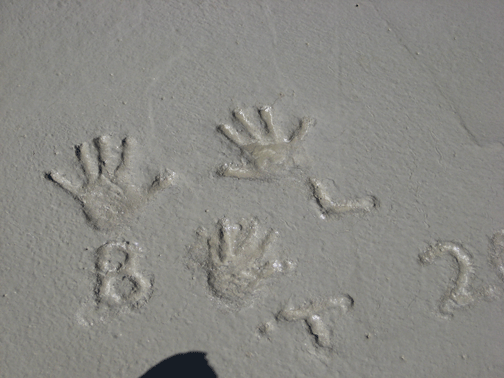
(Blade……Linkin….Tallen…2009)
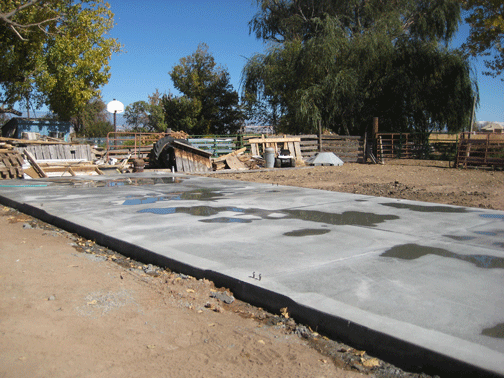
We have the foundation in place!
The storm is leaving so DH is back in the corn field! We didn’t have rain!
YEAH!

We are moving right along on the barn
In-between harvesting the corn and hauling hay-
And the bad weather
(Blade……Linkin….Tallen…2009)
We have the foundation in place!
The storm is leaving so DH is back in the corn field! We didn’t have rain!
YEAH!
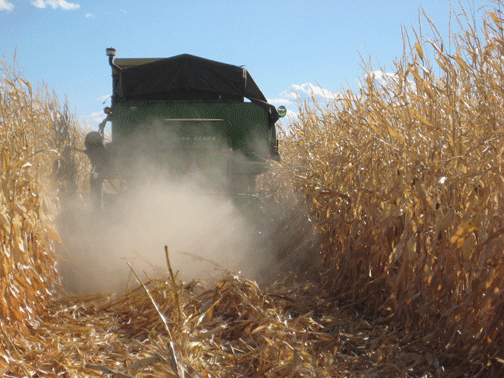
We (meaning DH really) started combining corn late yesterday.

The moisture content is 12.
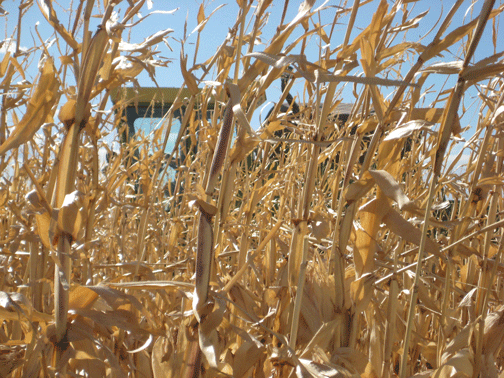
Now if the rain will just hold off …
Linki’s chickens have finally started laying eggs. She was SO excited to bring Grammy some of HER eggs.
They are Blue! Oh! My! Aren’t they just beautiful!
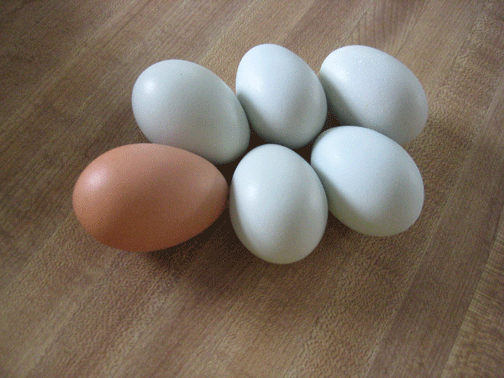
I took pictures of her eggs up against my Rhode Island Red eggs. (I have one hen who lays a small egg.)
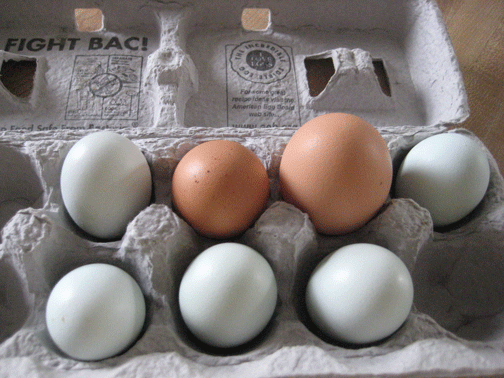
It’s really fun to have grandchildren and more than delightful when they like the same things you do!
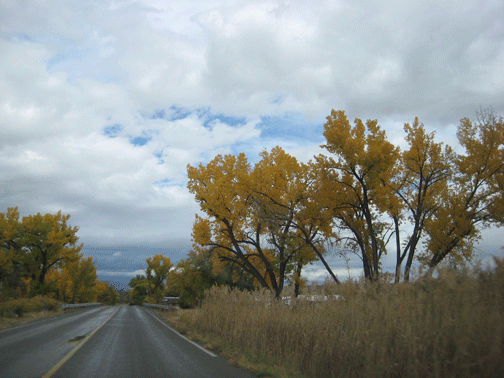
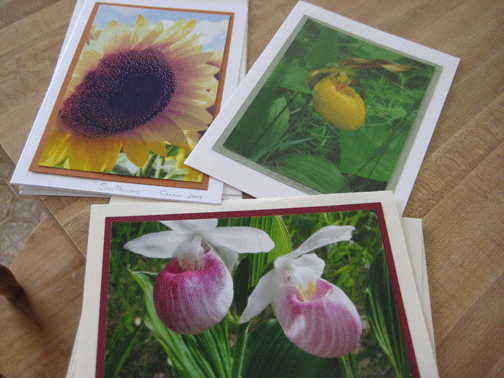
Today’s world has brought to us the riches of wonderful and thoughtful friends.
Far Side sent to me these darling photo cards as a thank you.
What a wonderful time we live in, when friends from around the globe can be made in the twinkle of an internet second through blogging.
Thanks you, Far Side! Your photography is beautiful; I will enjoy mailing these cards to friends and relatives near and far!
Although we stopped milking cows, (we still raise beef cows)
and we stopped using horses, (we use four-wheelers now)
and we stopped raising pigs (the price of baby pigs is too much).
We still have life in the old barn.
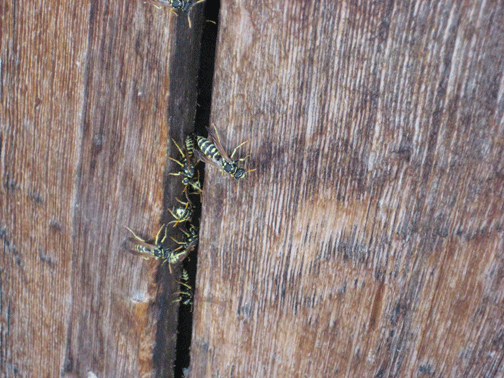
These little bugs are a pain.
They are helpful…they prey upon lots of garden pests, they feed their young on lots of invertebrates which cause damage to plants and flowers such as aphids and caterpillars, and they pollinate flowers.
It’s good to leave them alone so as not to disturb the natural control of pests and reduce the need for insecticide.
But they ruin your work, they get into your hair and face and, of course, they sting.
As annoying as they are, wasps are very beneficial and interesting insects, with a highly developed social structure. Wasps work really hard during their short lives and maybe deserve a break from their status as the creature we most like to eliminate.
Generally you are unlikely to get a wasp sting until autumn, unless you accidentally put your hand or foot on one and they are defending themselves, or unless you disturb a wasps nest. (Which could be anytime you come near one).
Up until late July and early August they are busy bringing up and feeding larval wasps, chasing insects, and foraging for food and maintenance materials for the wasps nest. After that their job is mainly done and they gorge themselves on the food they collect, especially on ripe and fermenting fruit; they become more and more dependent on sweet foodstuffs like these and will aggressively seek it out.
Additionally it will be getting hot and very crowded in the nest. It is at this time when they are most likely to sting humans, partly due to bad tempers caused by the heat and overcrowding in the nest, and partly in a semi-drunken reaction to being obstructed in their quest for sweet food.
I thought about going and on and on about these beneficial pests but I’ll stop here.
The old walls of the barn were full of these tiny creatures, it was rather disturbing to them and us (stings are not fun) but the walls had to come down and they had to move on.
I’m sure they were able to find a new house to rent close by!

It’s cold here!
We started a fire in the wood stove, it’s just that cold.
According to the Farmer’s Almanac winter is going to be rough for some of us.
Sadly we seem to be jumping from almost fall right into winter.
But in the midst of the rain, wind, sleet, hail, and almost snow I saw this!
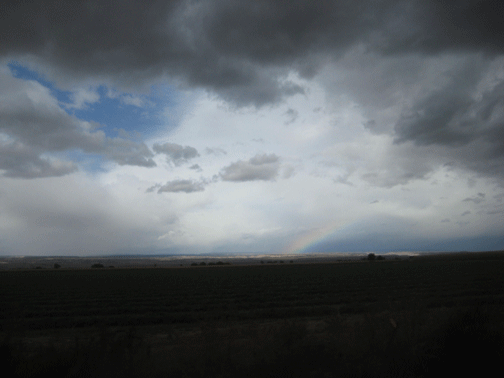
(Look real close-I forgot to enlarge it)
In spite of everything there are still rainbows.
You take on all the projects you were wanting to do, but couldn’t because of working TWO jobs.
Our days of milking, feeding out spring’n heifers, and raising pigs are now over.
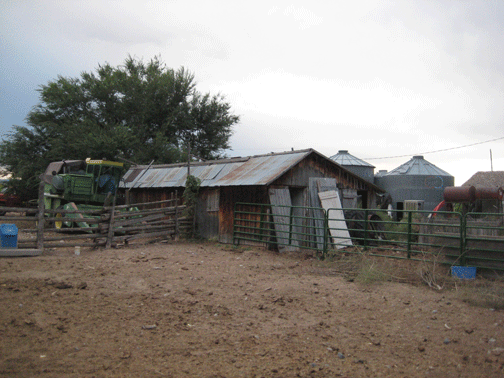
For years and years DH wanted a shop that he could put his ‘toys’ in and keep the other shop for his work equipment—tractors and such.
So DH decided he wanted to tear down the old barn and build a shop!
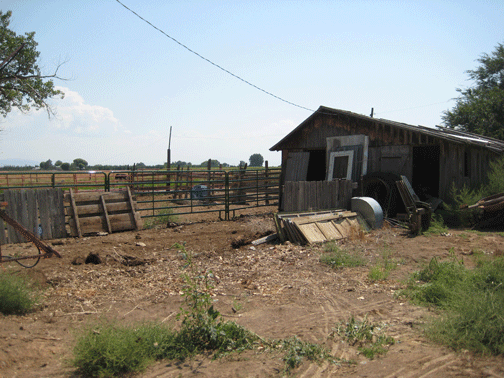
Surprisingly we got a teary eyed over tearing the barn down—
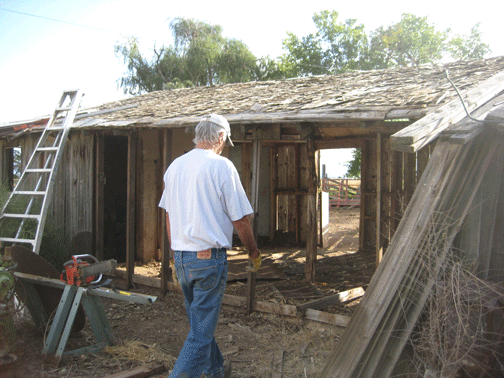
lots of memories of brushing down the horses, baby calves, milking the cows and having them step in the bucket, hauling feed to the pigs,
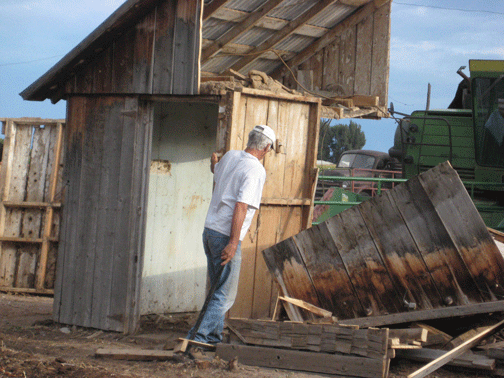
you know all those memory making events.
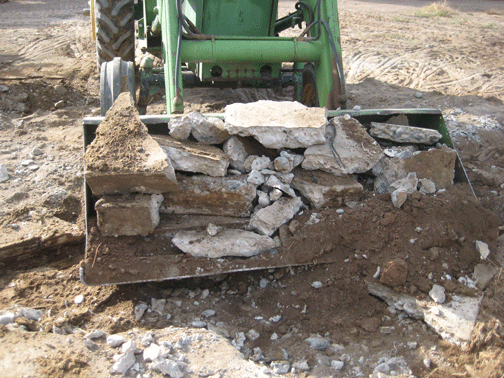
But now that it’s down we are anxious to get the walls up and the roof on.
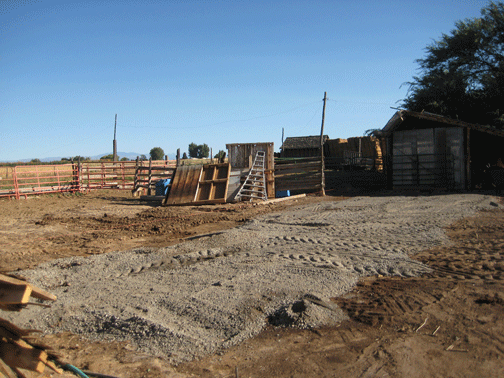
Sometimes change is hard, the end result is good.
We are now flushing the ditches and the gated pipe, sending mud and dirt into the fields for one last time. If we don’t do this we will have to manually shovel out the cement ditches and have to manually scrap out the pipe in the spring.
For those of you who are just now joining us you can use the search box and type in Step One to find out more about the different steps in irrigating.
Irrigation is using the water out of rivers and streams, diverting it according to a strict metering system (through a measuring device called a partial flume) down ditches to fields. This water is usually the result of melting snow runoff, and is fully subject to droughts.
First all of the water in any given river is already spoken for.
For instance the water in our canal (prior to emptying into the Gunnison River, then the Colorado River) has owners; there are ditch “companies” along the Gunnison River and the Colorado River, each ditch supplies water that runs through private land (as opposed to National Forest or BLM).
Each of these farms has a pre-determined amount of claim to a PERCENTAGE OF THE WATER FLOWING BY. So if the canal is running 1,000 cubic feet per second and the farms, who share the ditch, are at the top of the water chain.
There is a state water inspector, called the ditch rider, who comes in and regulates the flow of water into the ditch through a head gate. He –and he alone- opens that gate and allows the proper cubic feet per second allotted to that farm into the ditch. This allows the rest of the water to remain in the canal and flow down to the ranches, cities, and towns that have claim to a share of water in the creek. And yes the amount of water (EVEN IF YOU PAY FOR IT) can and is cut back to barely making it during times of dought.
The ditch rider must insure that no one farm takes out more than their allotted share (the rights to water go in order of date the claim was made, so a newer farm, defined as new fields, or arable land–not the sale of existing land and water rights to a new owner–will be bypassed during times of drought in favor of established claims to the water based on the order received.
Then there are Cities. The Cities of Palisade, Grand Junction, and Fruita, Colorado, Moab, Utah, cities in Nevada, and Los Angeles, California, all have claim to some of the water flowing down the Gunnison River and into the mighty Colorado. Some of these claims are very old, and trump the rights of the oldest of ranches/farms.
In 1909 our water canal system was built and this year we celebrated-along with all of the Uncompahgre Water Users, water arriving on our farm (our farm was created in 1906 by Terry’s great grandparents; we are fourth generation farmers in our area.)
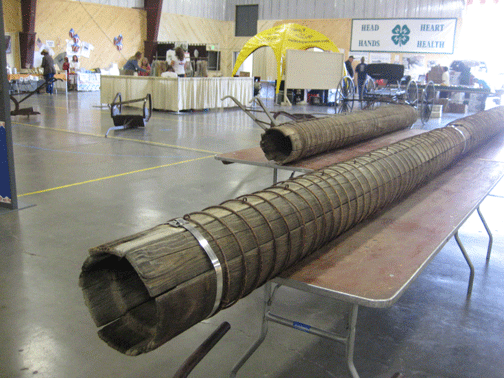
The two photos show a salvaged water transfer pipe laid in 1909.
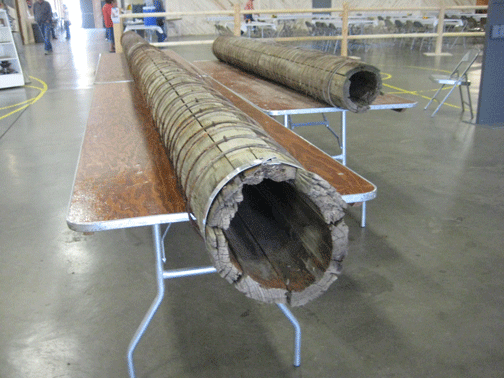
We’ve come a long way, Baby! Ain’t it grand!
The storm has left us, moving on passed the Rocky Mountains and into the interior of the map. We woke to a very cold morning! 24* and heavy frost lying everywhere.
The onions will still be able to be harvested; the farmers will just have to wait until they warm up and dry out. If the beans haven’t been pulled they are now cow feed.
The alfalfa is done for the year, no more hay to be made.
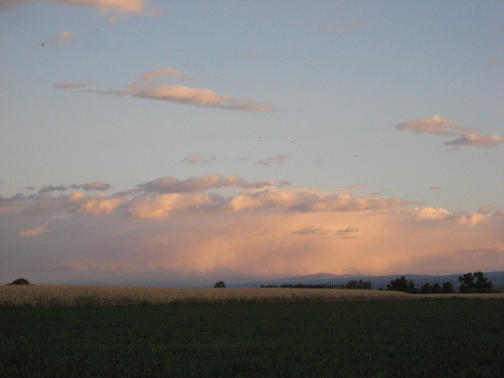
It’s still snowing in the mountains, but that will leave later on today.
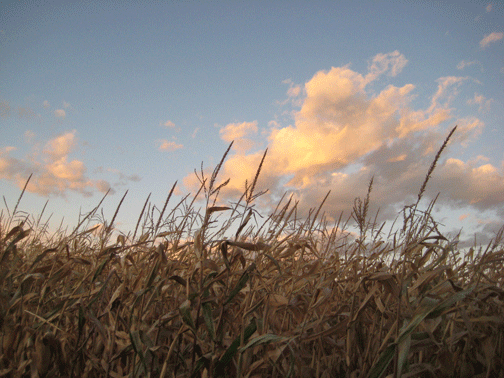
All the songbirds are gone but the Canadian Geese are back. Lose one blessing gain another.
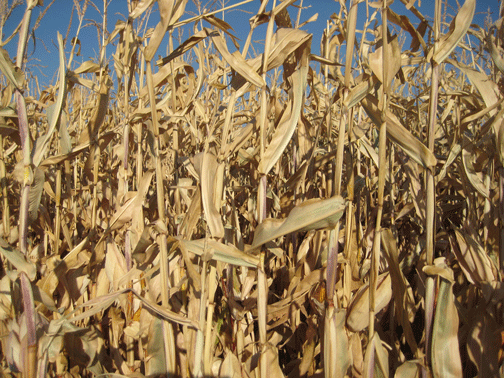
We are continuing to wait for the moisture content to drop. We do not store our gain in the butler granaries anymore. The Elevator takes everything we have as soon as we get it off the fields. It win-win for both of us! Happy Fall!

