Of course you have to hook everything up to the tractor. Terry likes to use the 730 to pull the beans
 That thing on the front is the bean puller…here’s a better photo of it

Then the bean blade
 The puller lifts the beans up and the blade cuts them off
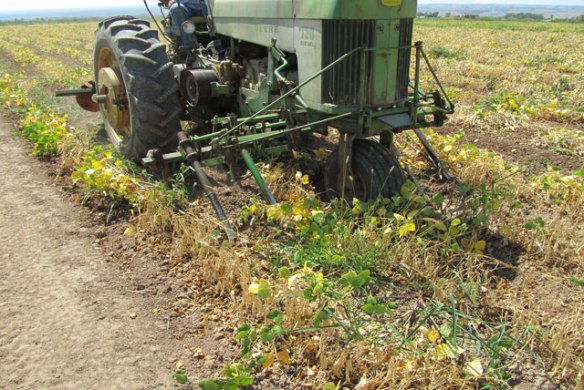
Moving down the field everything is pushed together into rows
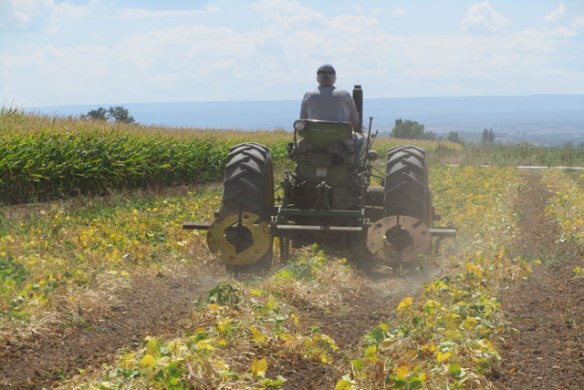 The rows are allowed to dry for week (unless it rains, then a mess occurs)
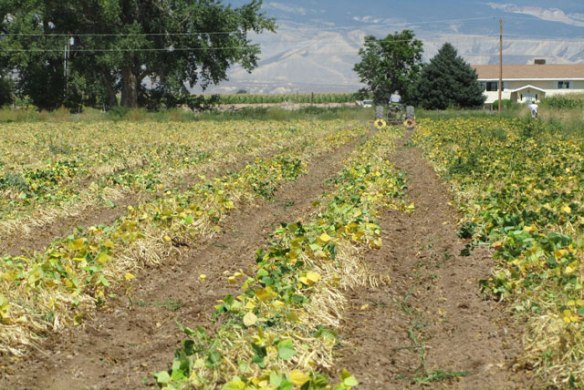
All pulling of the beans occurs in the morning, while the dew is still on the plants. If you look you can see how dry the bean pods look. They are very dry. A little dew holds the pods together so they don’t shatter and spill the beans into the ground. If a pod shatters and the beans spill, that is then end. There is not a way to pick up the beans from the dirt.
After a week. It’s time to start combining. Combining is ALWAYS after lunch. You don’t want the plants to be wet and clump in the combine and cause a wad mess. You also don’t want wet beans going into the combine and molding. If you deliver wet beans to the beanery (where they sort, sack, and sell the beans) they will refuse your load.
For a farmer that is money and time lost.
Dry beans for the combine only!
 We are not big farmers and our equipment is not new, but it is paid for and Terry knows how to fix it if something goes wrong. He also has a small combine herd of combines that he uses for parts since our stuff is really dated.
 Here the combine is picking up two rows of a time and shelling them and putting the beans in the hopper
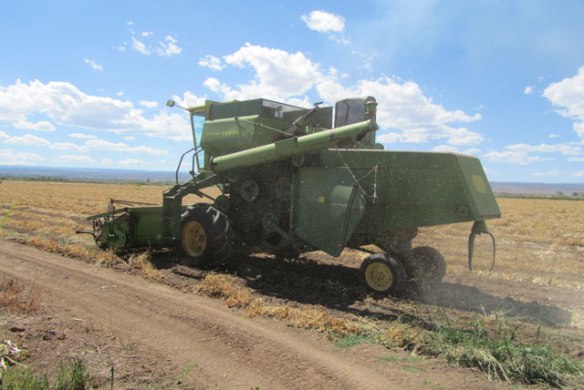
The weeds and the bean straw is flung out the back

Leaving just the straw behind.

Once the day turns to evening and the cool comes on, the farmer must stop. Lots of time the lights run until the operator just gets too tired and calls it a day.
The hopper of the combine is dumped into the bin of the grain truck

When the truck is full, but no over flowing it will be driven to the beanery about 5 miles from our home. The trash you see in the beans (weed leaves that made through the trasher into the beans) will be screened out. Then the beans are sacked ready for market.
But first….we got to get them there!
After we get done with the pintos our next crop to harvest will be the corn. But that won’t be until the end of September.
Linda
 Life on a Colorado Farm