Good Fences — Thursday, June 12, 2014

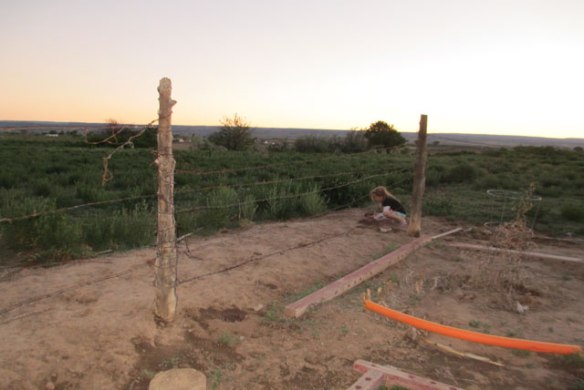
Fence-and-TallyA five-strand barbed wire fence with cedar posts.  And Little Tally making mud pies for supper.

Priceless!

For more fun fences and gates head on over to The Run*A*Round Ranch.

Then stop by here again on Friday.  Friday is the 13th and it comes complete with the FULL MOON!

Your Friend,

Linda

Footprints in the Sands of Time —-June 11, 2014

Sunday our oldest granddaughter left for camp for the week.  Bladen was supposed to go but he is on the down-hillside of recovery of pneumonia.

Their Mom and Dad needed to go to Craig, Colorado.   Bladen and Tally thought it would be fun if they came to stay with Grammy and Grandpa (instead of huge long boring ride to Craig).

Blade-helping-GrammyBlade is twelve.  He was lots of help.  Although, I wouldn’t let him do lots (still recovering, I would remind him) he could do some things for short spells.

IMG_3497Which meant that the 6-year-old had to give it try to also.

🙂

They stayed with us until last night.  We had lots of fun, even going to play miniature golf one night after all the work was done and the last set of water in place.  It was ‘way dark’ when we finally drove home.  Another ‘cool’ thing.

Several  years ago I had a wonderful friend, who has since passed, tell me once: “You know, the footprints on the sands of time are really made with work shoes.”  I had forgotten all about her saying this until I ran across the quote last night, while reading just before bed.

Those footprints start young, don’t they?  They start young and they stay with you (or your children or your grandchildren) all the rest of life.

When it is you and your children it is a necessity that your children learn to work, to process information, to be a ‘big help’.  But with your grandchildren you are giving them a gift…but on the same hand they are giving you one right back.

There is nothing better than working with children who really appreciate what you do and want to be part of it.

The footprints might be on the sands of time, but in reality they are created in the soul.

Your friend in life,

Linda


Little Acts Create Giants— Monday, June 9, 2014

Tile-HouseWe live on the farm Terry’s Grandfather created…Misty and her family live on the other part of our farm which was started by Terry’s Great Grandfather on his Mother’s side.  (We purchased the farm from the estate many, many moons ago.)

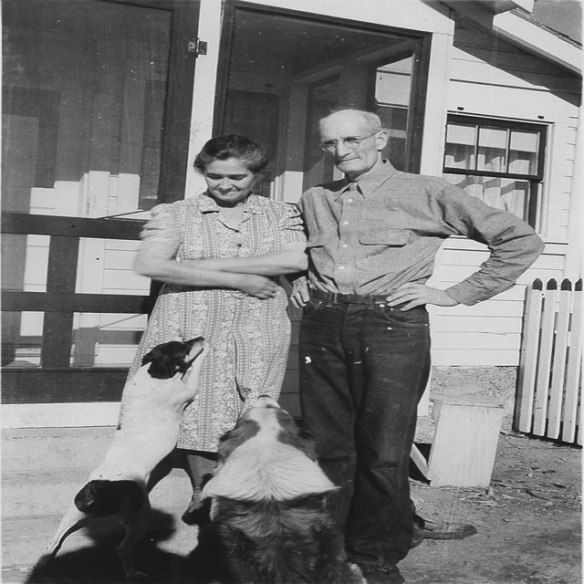
0049Meta and B.J. Brown

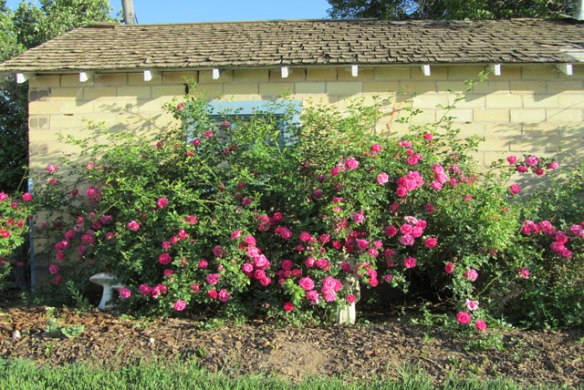
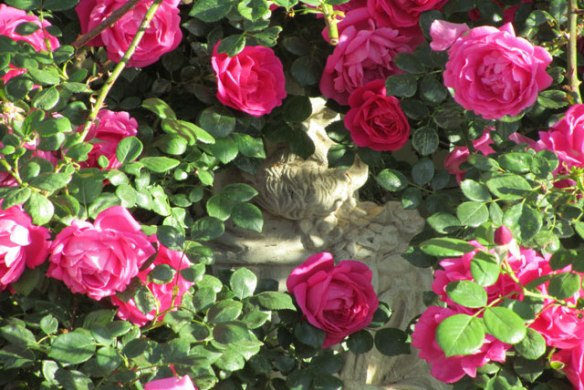
The first photo shows the roses that Meta planted way, way, before my time.  Those same roses must be 95 years old now.  They are sweet smelling and every so short lived.  I adore them.

Meta planted them on the side of the Tile House…the house you see behind them.  We call it the Tile House because the whole little house is made from tiles.

When the Tile House was created this farm, the one we live on, was a farm and a Dairy.  It was the only Dairy for the town of Delta.
In the Tile House Meta, and daughters, Benita, and Sally washed up the many, many milk bottles and cream bottles, which were filled with rich, lovely whole milk and delivered early in the morning or late in the evening twice a day.


Also, in the Tile House a milk cooler and a cap and bottler shared space with the cleaning tubs.  IMG_4259Out in the barn, B.J., and sons, Jack (Terry’s Dad), and Kenneth milked, fed the cows. Then hauled the milk into the Tile House.  (Remember this was all done by hand.)

In the the Tile House the milk was first filtered, then poured into the cooler, next into the separator for cream, and skimmed milk. then capped and bottled.  The whole milk was just filtered and cooled and capped and bottled.

The wagons were loaded and off the boys would go delivering milk to the residents of Delta.  Once in town they would leave the milk and pick up the empty bottles —Benita said some of those bottles were nasty, nasty, nasty…others were washed and cleaned– sometimes with little thank you notes inside.  The cash for the milk products was always attached to a little envelope waiting with the empty bottles.  Benita said, “It was rare that people didn’t pay and Father had to make the trip to town to visit with those who owed.”

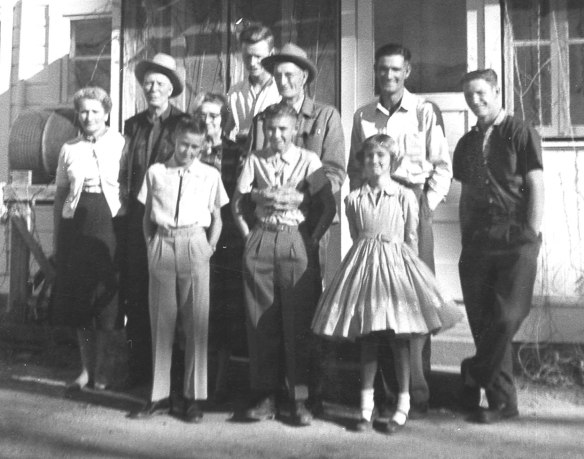
FamilyLeft to right—as I think I know them:  Sally and her husband Bud, the tall son of Sally and Bud in the back, right in front of the tall son is (I think) Meta, then B.J. with his arms around Terry. Next to B.J. is Terry’s Dad, Jack, and another son of Sally and Bud.  Right next to Terry is his best -friend and brother Roger and on the other side is his adored little sister, Carolyn.

The house they are standing in front of is the house we live in today.  It also looks pretty much the same.  🙂

Of the years that I have lived here we have had the special gifts of older people telling us that they remember when Mr. Brown delivered their milk to them, or how Mr. Brown and his sons would willingly give you a free lift to town on the milk wagon so you could get groceries then taking you back home.

Benita  told us that when Father found out about a little family who lost their Dad in a horse and wagon accident and couldn’t afford to have milk…he would drop off a bottle or two as a little surprise.  Never asking for money…just saying: “Oh, I had extra today.  If I didn’t let you have it I would have to pour it out.”

I always think of these little stories when I go into the Tile House, or even just glance at it out of the corner of my eye.  It really is the little acts we perform every day that eventually creates giants.

A farmer’s wife on a farm in Delta, Colorado

Linda


Making Hay —June 8, 2014

Terry finished up  the last of the hay bales this morning…driving the tractor pulling the hay baler in around 5:00.   He went out as soon as the dew started settling down in the wee hours of early morning…I think around 2:00.  I was asleep when he left.  (It’s around 7 in the morning [now] and he’s all tucked up in bed resting.
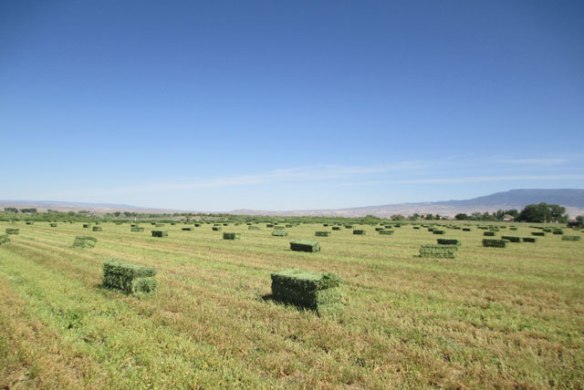
MoneyHe started baling yesterday morning around 7,  the dew didn’t set on until then.  He finished around 9 when the sun had finally burned all the dew off the plants. He likes to bale with the dew as it keeps the little alfalfa leaves still attached to the stems.  If you don’t have the dew the baler will knock the leaves off as it picks up the dried alfalfa and smashes it together forming a bale, then you are left with just a bundle of stems.   If there is too much dew or it is baled to green the bale will mold, or worse yet heat up and combustion will occur.
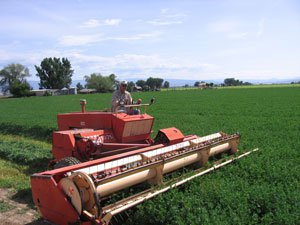
making-hay-for-blog

Making nice quality hay is a art.

I must brag a bit —I am married to a hay artist! 🙂

This making of good hay has always been a strong interest of his.  When Terry was 10 he was in charge of the cutting and baling of his Dad’s 80 plus acres of alfalfa.  Terry’s father farmed 160 acres and milked cows for the Clymer’s Dairy in Grand Junction, CO…I think he had somewhere around 50 head. Terry’s Dad raised all the feed–corn, hay for the cows, plus Red Clover for seed and pinto beans, maybe other crops.

By the time Terry was 12 he had a small hay making business (with the help of his Dad and his Dad’s equipment) — he made hay for his  Dad’s  Dairy, and several neighboring ranches.

I think his love of making a nice, high quality hay bales started way back there.  The example set by his Dad, his Mother’s drive to create something and to create it to perfection.

It still holds true today.
stacking-hay-13

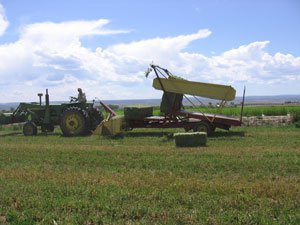
So he creates the hay bales and then it’s the dog’s and my turn to go help. While he is loading the hay with the stack wagon….a wonderful invention that took away the ‘hay crew’ (a team of young men, usually high school age, and the farmer…and possibly the farmer’s daughter to drive the tractor.  So what you had was the tractor driver, a young man to heft and swing a 50-80 pound bale onto a moving trailer/wagon on each side of the trailer/wagon and a young man on the top of the trailer/wagon to stack the load as high as possible.  Once it was HIGH the whole load and the people headed into the stack where the farmer (usually) was waiting.  Backing up the trailer/wagon the four men started stacking the hay bales creating a huge hay stack.   By noon–the hay crew arrived around 7 in the morning–lunch was ready.  This consisted of a HUGE meal—the farmer’s wife and if she had a daughter or two at home, spent the whole morning creating a giant feast!  For instance—Fried chicken, mashed potatoes, green beans, salad, corn bread or biscuits or homemade rolls, with some rich dessert to top everything off.  Large pitchers of ice water, or iced tea, or lemon-aid helped wash the whole thing down.  As soon as the meal was over it was back to the field.  Everyone received their paycheck after the last bale was stacked, maybe two days or so later.)
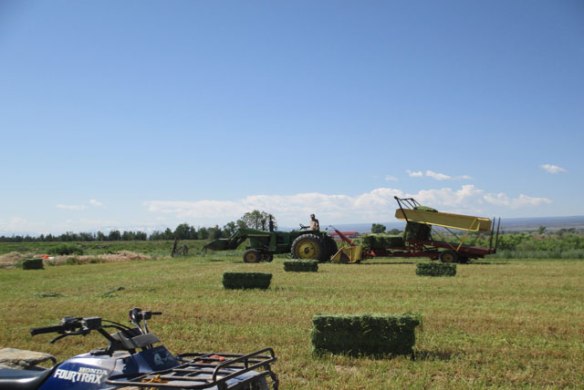
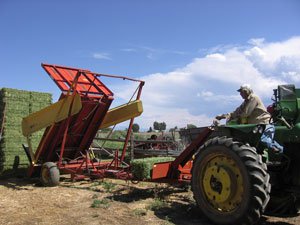
LoadingThe stack wagon simplified the whole operation.  Terry runs the stack wagon,
stacking-hay-30

He is unloading at the stack right here.
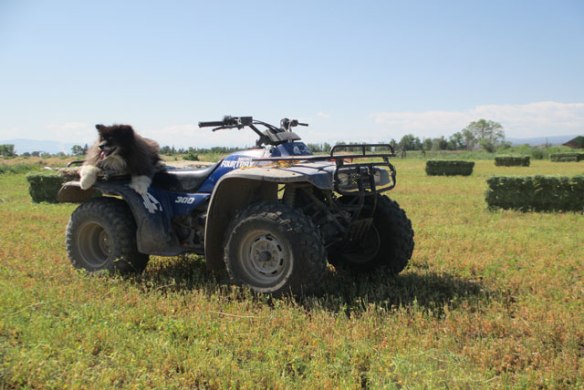
YepI run the four-wheeler.Fuzzy stays right with me.  He sees it his duty to always be ‘right with me’.
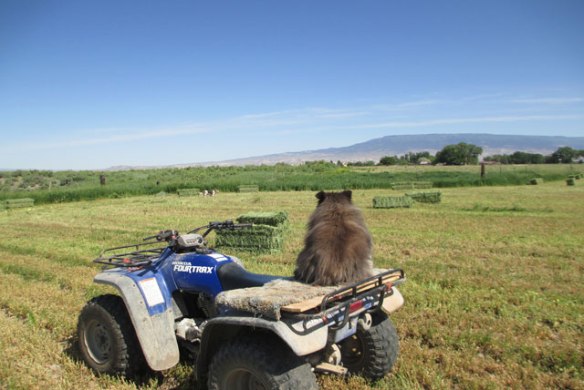
Work

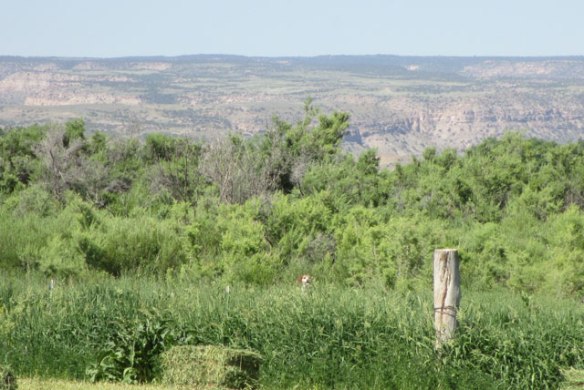
Boomer sees it his duty to check out what is happening all over the farm. (He is that tiny black and brown and white dot clear at the end of the field.)
See

(See Boomer in the brush? 🙂 )

Fuzzy and I go up and down making sure the bales are straight so Terry doesn’t have to get off and straighten the bales;  helping them slide right in and up into the stack on the wagon.
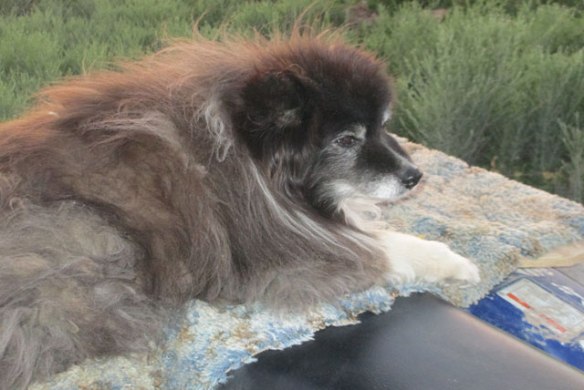
Still-helpingAfter I get done with straightening the bales, I take the loose hay missed by the baler and load it into a little cart attached to the four-wheeler…once more going around the field–forking the yellow sweet clover into the high grass at the end of the field for the deer to munch and the loose hay into my cart. As my cart fills I haul it to the last row still to be baled.  It’s hot work.

It’s important to get all the hay off because it will smother the alfalfa underneath and plug up the furrows not allowing the water to flow to the end of the rows.

My arms are strong so it doesn’t take me overly long.
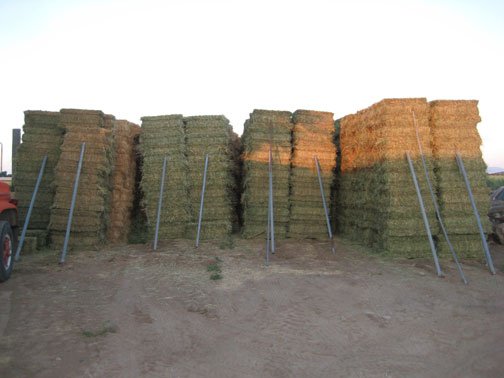
Hay Stack But today is Sunday. Today we rest. Although, Terry had to bale when the dew was perfect, we will finish the work tomorrow. Today we only do what MUST be done, like irrigate. Also two of the grandchildren are coming to spend Sunday and Monday and part of Tuesday with us since their parents are going to Craig to look for houses.

You have a nice Sunday everyone…it’s always good to have a sort of day off once a week.

You Farm Friend,

Linda


Good Fences and Gates — Thursday, June 5, 2014

Theresa over at the Run*A*Round hosts a Good Fences Thursday.  Hop over there and see what she has posted and then check out what other cool fences and gates are around the world.

Here is my contribution for this week….

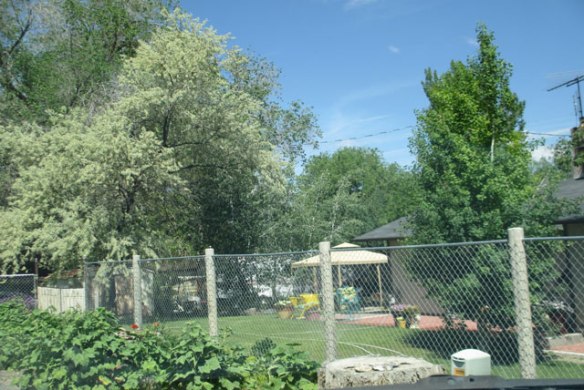
CementIt looks like just and ordinary chain link fence, but if you look closely the posts are made of cement.  I liked the appeal  and the idea the posts were homemade.

You are all welcome to join in…just hop over to Run*A*Round Ranch and link your fence or gate post each Thursday.

Your Friend,

Linda


A Tinge of Wonder — June 4, 2014


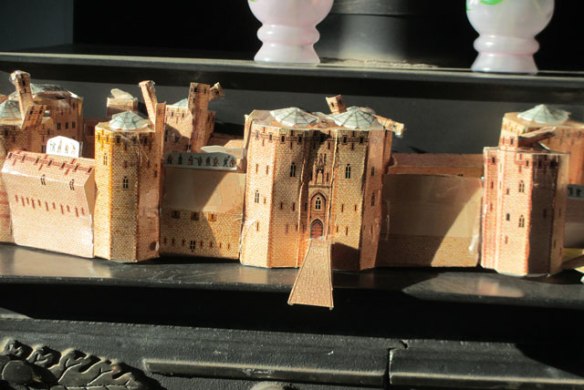
Bladen brought me over a gift.  He knows how much I enjoy ‘times gone by’.  Because he hasn’t been feeling well (he has been fighting pneumonia for three weeks (he is on medicine) and got bored. (No physical exertion with this mad disease).

Blade's


He spend several hours, cutting, gluing and creating a castle for Grammy.

How sweet this is!blueMy yard is doing well…although we  have extremely hot days (94*-34ºC) the night are cool (49*–9.4ºC).  By the time the heat builds up the hot winds develop.

There is also flooding in the low lands.

Spring-deer  The Gunnison and the Uncompaghre River are experiencing record melt (translated that means we had lots of really nice snow in ‘them thar hilsl’.  🙂

Both rivers converge at Delta..our town.  Once they converge (the Uncompaghre River (Un-come-pah-gray  accent on the pah) merging into the Gunnison River).

The Gunnison River flows on down to Grand Junction, Colorado, where it meets up with the Colorado River, the Grand Old Dame of Rivers of the West.

The flood warnings and floods are all along all the rivers clear to the Colorado-Utah border.  Sure does help with drought…water that is.

Sort-of

 I haven’t seen in rainbows for some time now, when I saw this ‘sort’a’ rainbow in the sprinkler I decided that I have to take my gifts where I find them. 🙂
Better-feeder

It’s the little things the buoys us up really.

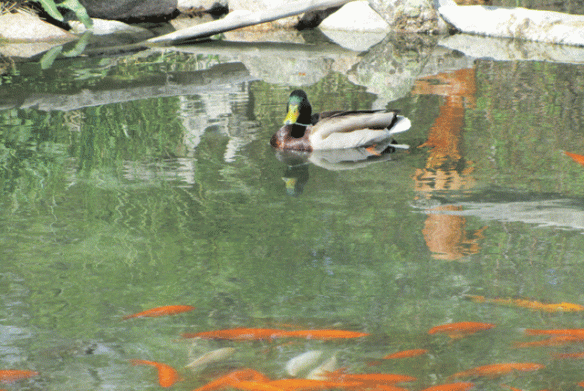
What's-for-Dinner Like this…a duck  swimming with a bunch of goldfish.  I thought he might be looking for lunch, but the fish were not afraid; they swam all around his feet and even touched him several times.

Summer-Goose

Speaking of birds…we have several Canada Geese who have decided to stay with us this summer.  They have nests in our upper end and hang out in the fields.

From Elaine Kenny

But the coolest thing I saw was an emailed photo from a long time blog reader Elaine Kenny…Conversations on back porch!
Evening-2It really is all there…wonder, excitement, joy…in the little things…big happenings are also nice, but in reality it’s the collection of little things that really makes every day have a tinge of wonder.
Your Friend,
Linda


First Cutting of Hay/Alfalfa —- June 3, 2014

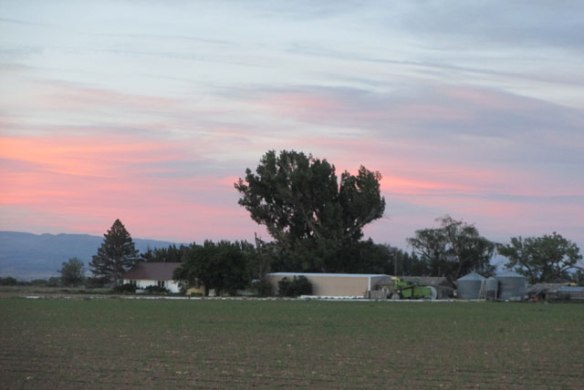
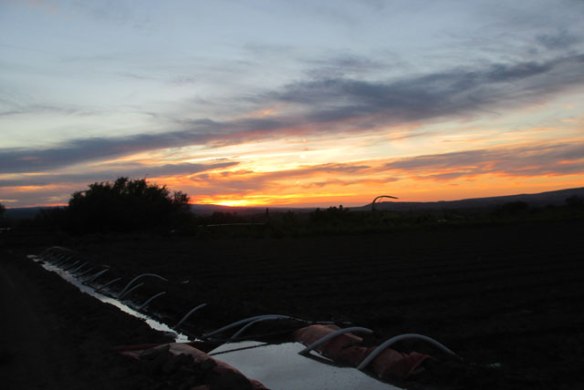
The header is a photo of our home coming in from first light Irrigation.  The sun just starting to rise — creating such a beautiful backdrop to the house and buildings I had to stop and take a photo.

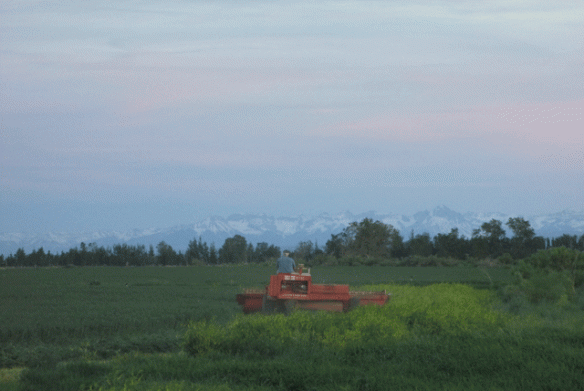
home-in-the-morning.jpgTerry started cutting the alfalfa yesterday afternoon

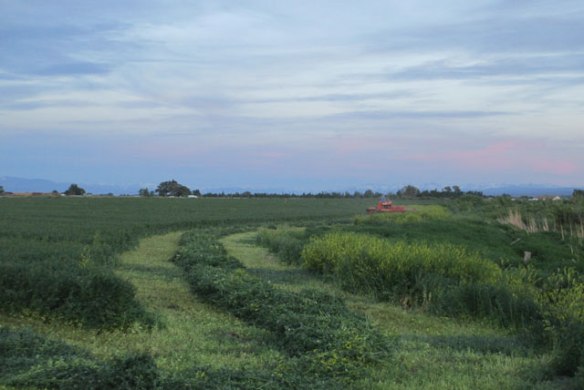
Making-hay-1It is some of the best alfalfa we have ever had…the standing alfalfa reaches my knees.  The rows are fat and thick and fluffy.

Going-through-the-sweet-cloIt’s so thick he is having trouble getting the old mower through the field. He will finish up this morning sometime before noon.

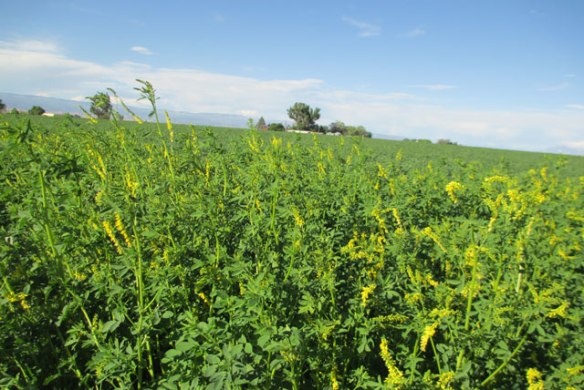
Sweet-CloverThe yellow at the bottom of the field is Sweet Clover.  We don’t bale it up but fork it over for the deer to munch on…cows will eat it, but customers don’t like buying it.  Instead of wasting this sweet smelling weed we let the many deer (who live on our place) have an dried “hay” treat.

ThickNow if the weather will just hold off for the week and we have a drying breeze —not a row tossing wind–we will get this alfalfa into hay form, then into small bale form, we will get it onto the back of trucks or trailers, and haul a huge bunch down to Delta Elevator for them to sell for winter feed.

Evening-3Please keep your fingers crossed and send Magic thoughts for good hay making weather…Terry and I will really appreciated it!

Your Friends on a farm in Delta, Colorado

Linda


Memorial Day — May 26, 2014

I most humbly thank each and every one of you, who have given service to our country!  And to those who have given the ultimate sacrifice; that I and those I love might be free!

flags.jpgYou Friend

Linda


Flying Low — May 25, 2014

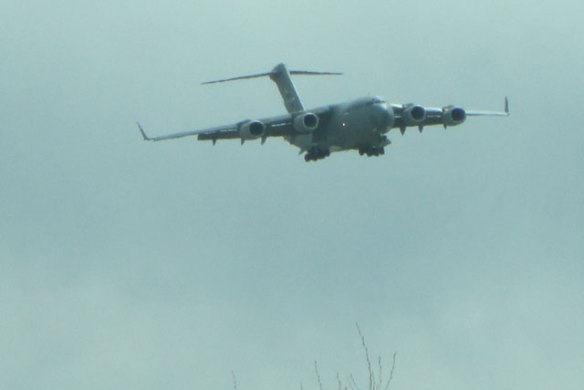
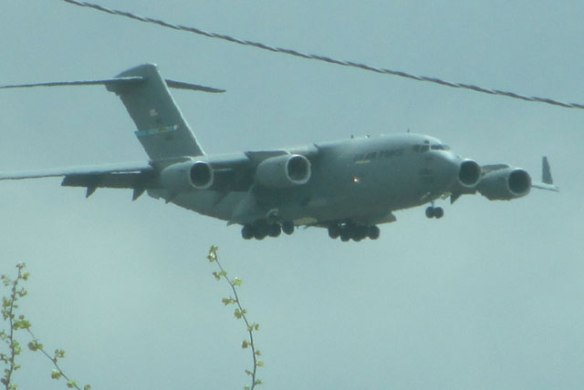
The other day Terry and I went for a small ride, just to break up the monotony.  We headed up to Blue Mesa Reservoir and then on into Gunnison. While traveling into the town of Gunnison we happened to see this low flying flying machine heading right toward us

hhhh How cool is this!

hhhAnd we were stopped at the stop light AND…

hhI had my camera out sitting right by me!

hThey flew along the side of the car close enough we could read the words on the side of the jet!

We rolled the windows down and enjoyed the whole sensation…power, speed and excitement all rolled into just the few minutes it took for the red light to change into a green for go!

The whole thing was pretty darn exciting.

After a quick lunch we drove home.  The water in the Blue Mesa Reservoir is slowly rising it has a long ways to go until it reaches the normal spot on the sides but it so much better than last year.

Your Farm Friend,

Linda


Delta’s First House — May 19, 2014

First House

Guest Article by Jim Wetzel, Curator of the Delta Museum

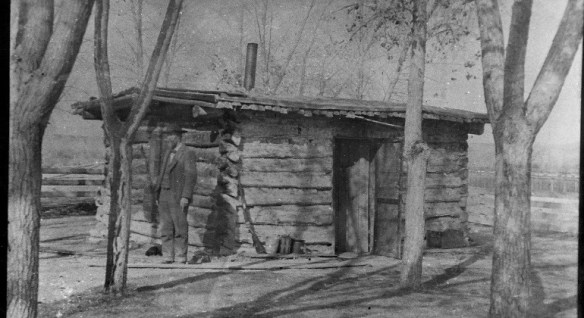
There is no question that Delta’s first house was a log cabin. If you have ever visited the Delta County Museum, you are familiar with the mural which is painted on an exterior wall near the entrance to the museum. The mural depicts this log cabin, and is a reasonably accurate view of what the cabin looked like. The cabin was built by George W. Moody, and was captured on film in 1900 by photographer Francis M. Laycook.

That photograph, shown above, is part of our photo collection in our museum, and was the documentary evidence for the mural. Not too long ago, I was given a copy of a hand-written letter by Ben Laycock, and he had titled it: Retrospect’s by Laycock – The First House in Delta. The letter is not dated, so it is not possible to determine when it was written, but it details his effort to determine the earliest house from testimony from some of our earliest settlers, one of which was Moody, himself.

The cabin was located “just west and north of what is now the West end of the original Second Street.” We always tell the story here in the museum that it stood near the sugar factory silos. Laycock noted that the cabin “was torn down shortly after the sugar factory was built.” The factory was built in 1921, but the silos did not appear until the 1960s, and the factory complex almost surrounded the silos on three sides. Suffice it to say that the cabin stood “near” the factory.

George Moody came in before the area was legally open for settlement. He was single, and “not menacled by any wife or children” according to Laycock. He further states that Moody completed his cabin in late 1881 but abandoned it for the first winter and “sought refuge with the soldiers on the brow of California mesa” by working in their kitchen.

Our museum version reads a little different, for we heard that the soldiers from Fort Crawford had arrested him and put him in their brig until the area was open for settlement (September 3, 1881), after which he returned to his cabin to complete it. I have read other sources which describe a U.S. cavalry encampment on California Mesa, so that part is accurate, but whether Moody was on the mesa or in the fort, or both, is not verified.

There will always be confusion over the spelling of the Laycook / Laycock name. The genealogically derived name is Laycook. At some point in Ben Laycook’s early adult years, he changed his name to Laycock. We have no evidence that this was done legally – through the courts – but he changed it prior to his first marriage. He was married five times. If that isn’t confusing enough, his father, Francis M. Laycook, was married three times, with Benjamin Levi Laycook the offspring of his third wife. Ben was one of twelve siblings of the three marriages (8-1-3). Once Ben changed the spelling of his last name, the change has continued through his lineage.