Water—-The Lifeblood of Life

We received notice yesterday by the Ditch Company that the irrigation water is to be shut off early this year and (depending on the snow levels over winter) to start later next year.

Although, we have turned our water off, there are those who have planted winter wheat and also those who have just cut their hay and will need to water the alfalfa field one more time before going into winter.

“Due to drought conditions and the heavy usage of stored water this summer, the Uncompahgre Valley Water Users Association –UVWUA- will be shutting the Gunnison Tunnel off two and a half weeks early this year. The shut-off date will be October 15th. This decision has been made to conserve Taylor Reservoir water for next year. Growers planting winter grains should plan accordingly. Pending the type of winter we have this year, there is a possibility water will be turned on later than normal next spring.  For questions or comments call the UVWUA.”
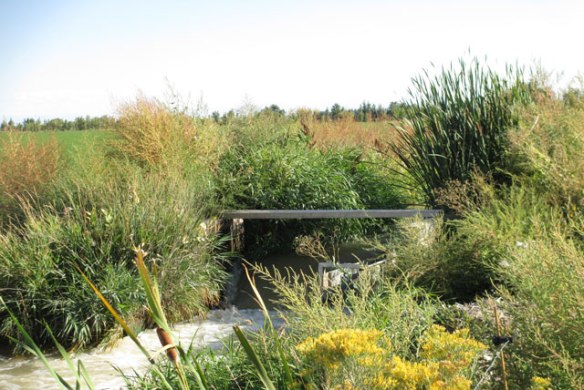
 

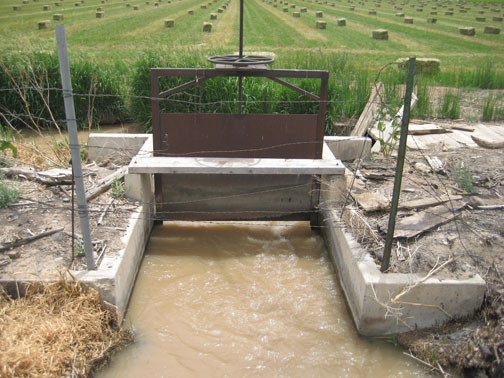
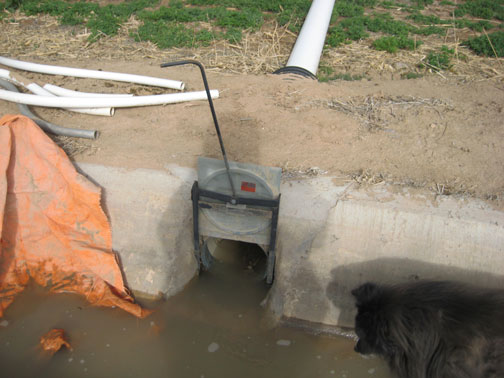
You are looking upon our head gate for the irrigation water to our place.  Our share of this canal (the Ironstone) is taken out at this point.  It goes back in at the end of our farm.

We were watching the Rural Farm News (yes, we do things like that) and the report on there was this drought is the largest drought in years, and years, and years, encompassing most of the United States clear into Canada.

As much as I dislike snow and ice and the dark and cold of winter….I’m sure there isn’t a person out there that doesn’t want a lot of moisture this winter.

Finger crossed and toes crossed for moisture for drought stricken regions everywhere!!!!

Linda
I’m BAAAAAAAAAAACK!!!!!

We were lucky, the weather held until we got the hay in.  Terry stacked it in a whole other spot so it won’t get mixed up in the really good hay. 

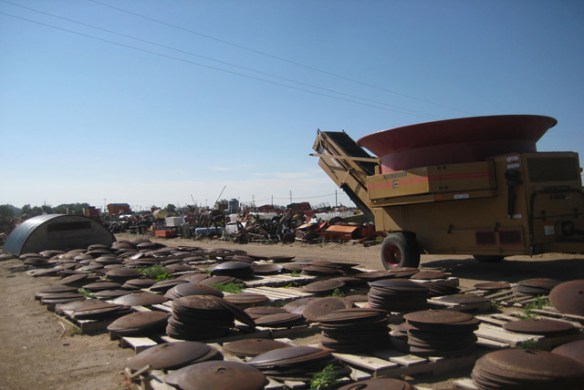
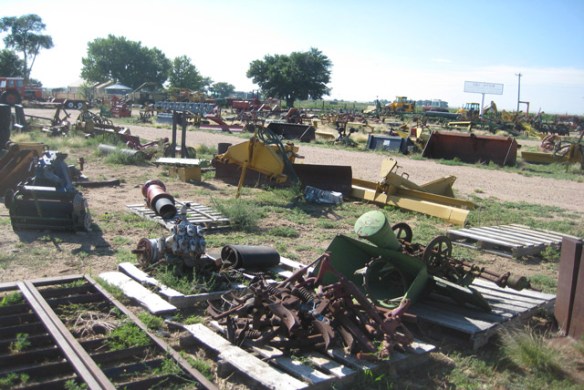
Since we only had the irrigation to do and Terry needed a part for one of the tractors we took off for Rocky Ford, Colorado.  (The home of the wonderful cantalope—–and great tractor and combine salvage yards).

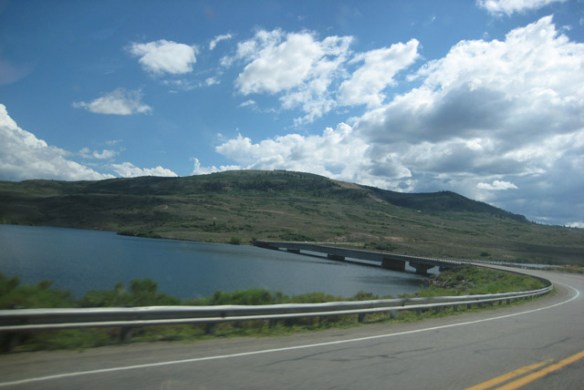
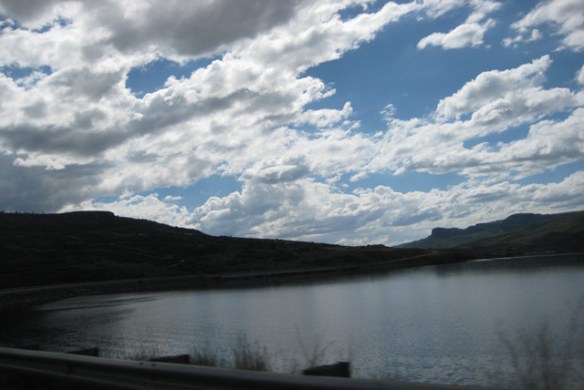
Blue Mesa Dam was beautiful

This is where we get our irrigation water, so seeing if full is wonderful!

It was fuller than we’ve seen in a long, long time.

The shopping center was full of all sorts of goodies

So much to chose from

In the end the perfect part was there.  And for a really nice price.

Home again.

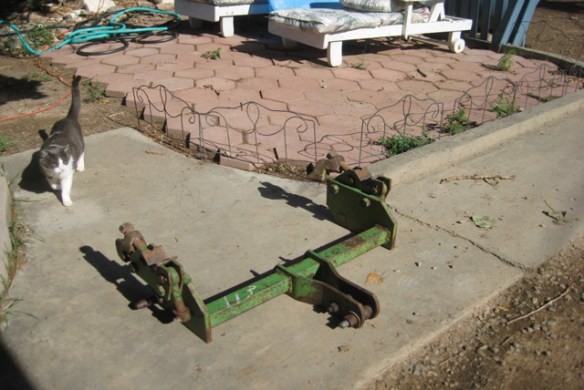
Along the way I was given  a gift also

Pretty Cool.

We got back to a couple of really big, fast moving rain storms.  Everything is rich and green, including the weeds.

So I guess you know what I’ll be doing today. 🙂

Thanks for stopping by and leaving comments.  I plan on getting around to everyone’s blog soon and hope to get all my comments answered today!

Linda

Anniversary of Delta County 1883-1958- The Fair

Here is Where it all Begins and Ends

Black-Canyon-Water

On Thursday or Friday of this week our irrigation water will be turned off. 

No longer will irrigation water from the Gunnison River flow through our canal on its way to California.

Gunnison-River

The canal will dry up and stay empty until next spring…the last week in March.

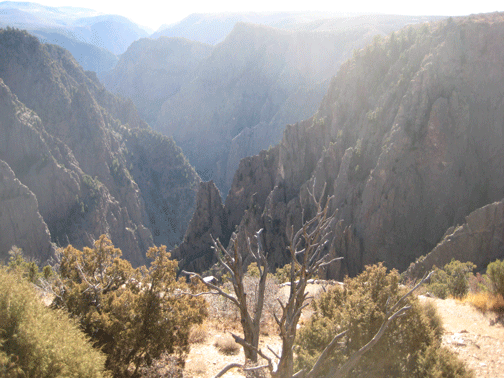
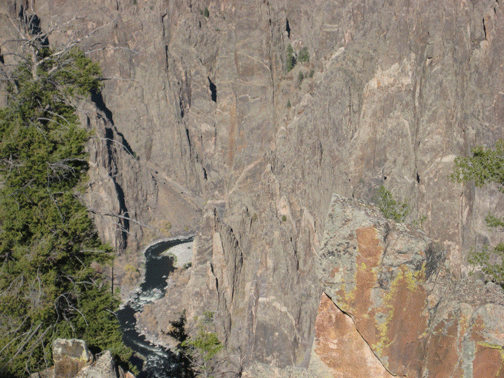
I am showing you pictures of the Black Canyon of the Gunnison. 40 miles from our farm.

Gunnison-River-becomes-our-

This is the canal that diverts the allotted portion of the Gunnison river into canals for irrigation and drinking water.

This canal is so large a grain truck can sit in the bottom of the canal and there is still several more feet to the top.  Lots of water flows through here. Lots of water.

I actually like this incredibly dangerous and frightening water.  I enjoy knowing the life that it brings to the land.  And I like drinking it too 🙂

Linda

More on Irrigation Water

Sometimes people get weirded out that farmers waste water, but water is never wasted. (as far as I know).

After we put the water through our fields the water goes back into the canal; rushing to the next farm down the way.  This is the main artery head gate at the end of our place. 

Canal-Headgate

The canal divides the water to go under the road to next set of farms and down the hill to a whole different set of farm.  These big head gates give me vertigo, so I am grateful I don’t EVER have to do anything with it.

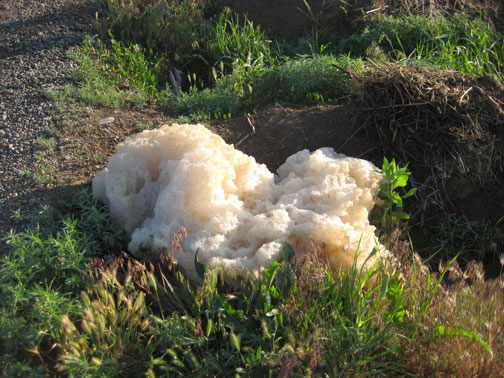
More-Ditch-Foam

This is a cool photo of ditch foam.  I like to find ditch foam.  It is a rare, but not unusual phenomenon, which occurs when conditions are just right.  I found one awhile back and posted about it here. https://coloradofarmlife.wordpress.com/2007/07/27/ditch-foam-happens-once-in-a-great-while/

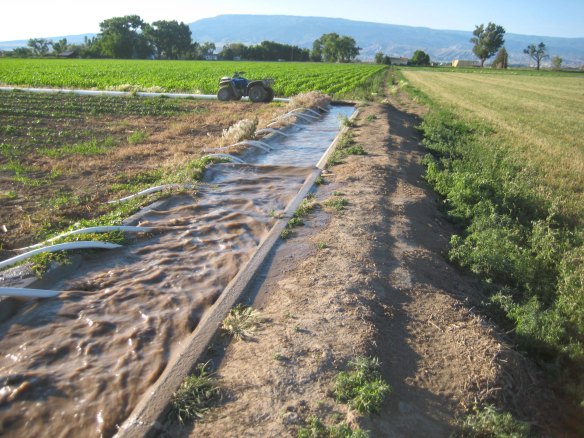
Moving-Water

This photo shows you a head of water let loose and moving quickly.  When you pull up the dam the whole head swooshes down the ditch, so you have to hurry to beat the water to your next set or the water can run over the sides.

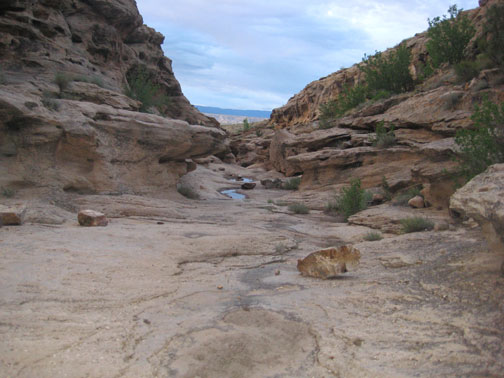
Devils-Kitchen

Our farm is on a mesa, just above some very interesting canyons.  Last evening we went to Fat Man’s Misery and walked up to Devil’s Kitchen.  The formations here are just amazing.  The last thing you want to happen is to be here when a flash flood occurs.  And they do occur, as you can tell from the standing water.

I am not going to be able to do much posting for a few days now, we have company coming, and a short trip to Dove Creek to visit some friends.  But I will be checking everyone’s blog over this next week, just not planning on doing much posting on mine.

Everything should settle itself down after the 4th of July and return to normal.

Have a nice week and really good 4th of July!

Saturday

making-a-ditch

Saturday my husband leaves for Macon, Georgia, to help our son move back home.  This is a good thing for us, but it will entail lots of hours of driving.  While he is gone I will be responsible for changing the water, feeding the animals, and keeping wood in the fire. (Maybe it will warm up and I won’t have to worry about that part.)

I have a few more step 7 photos, but I need to take them first.  Then Step 7 will be complete.  Irrigation lasts until October, but setting the water up for the first time, takes lots of work.


dirt-ditch

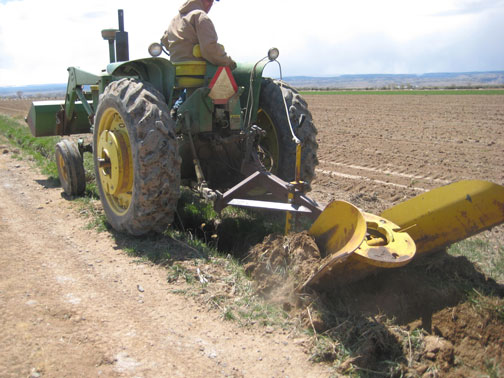
We still have a few dirt ditches, which have to be cleaned out every spring and when they sand up, cleaned out again and again, until the water is turned off.

And we water our pasture out of an earth ditch. 

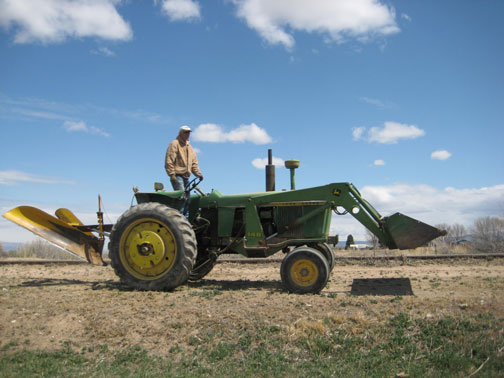
One thing about farming, you get to use big equipment. 

earth-ditch

Here is how the gates are opened from one ditch to another on our place.

gate

The orange dam is how the water is stopped from going down another ditch.  (The ditch you aren’t using at the moment.) 

Step 7- Starting the Irrigation Water

utah-wind

Before we could begin a big wind storm from Utah hit our area bringing with it 45-60 mile an hour wind.   

Step 7 has many, many parts to it:

1.     Call the ditch rider so the water can be turned into your head gate.  This is the amount of water you are allotted per season.  You can NEVER go over this amount, but they can cut you short of your amount because of drought.  You still pay the same, whether you get your full amount or not  (and water here, costs more than the taxes on the farm.)

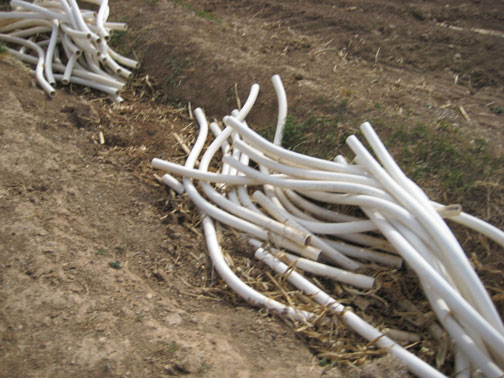
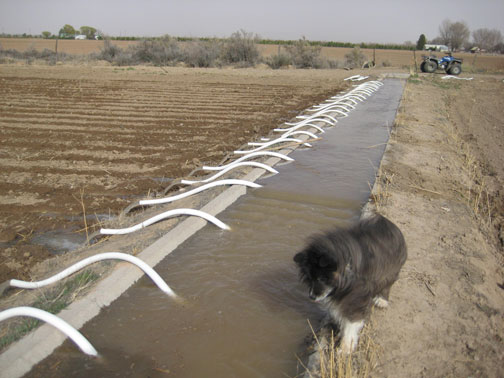
2.     Gather up all the siphon tubes and lay them out in the correct pattern

picking-up-tubes


 3.    Turn the water down the main ditch artery for our place- once it is turned into this ditch, that ditch will always have water in it until the end of the growing season.

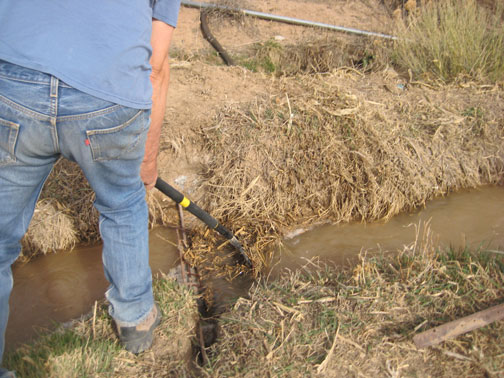
4.     Although we cleaned the ditch (by hand-called digging out the ditch) the really messy wind had filled it back up with trash

cleaning-the-ditch1

5.     Set the tubes.  This requires a siphon like action.  I have to put the tubes in the ditch, cover up one end and then hurry and spill it over the side. 

Terry just walks along and covers one hand over the end, pumps two times and drops the tube in the furrow.  I take forever; he is done in a short time.  THEREFORE I set the tubes in the furrow, while he siphons the water into the furrows. We try to have enough tubes that once they are set we don’t have to pack them again. But every year we have to replace tubes as they wear out or get broke.  Some years we just pack the tubes as that is a cheaper way to go. 

Depending on the field there are about 30-40 tubes per field.  It also depends on the amount of water in the ditch.  Sometimes we double tube, but that is later on in the season.

setting-tubes


6.     The water is moved after the proper amount of ‘subbing’ has taken place.  And the water has made it to the end of the field.  Usually about a 12 hour set.  But when water is short it is moved every 8 hours, day and night to get it through all the crops.

wind-in-fuzzys-fur1

Fuzzy loves to help, he spends lots of time barking at bubbles, trying to catch sticks and sometimes jumping in and wading. 


7.     The irrigator has to follow the water down each row, making sure it doesn’t plug up, sink in a hole, cut over into another row until it gets to the end of the row.  5 acres is a job, 30 acres a pain, and 50 acres horribly hard.  We farm 80+ acres.  The water only has to be walked if the leveling job is not good (that’s why I say it is an art form).   Then we only have to walk until the row is imprinted with the memory of the water, after that it is sealed.  BUT….once Terry cultivates we have to start over again.  Then when the crops get too big to get the tractor through the field the water just has to make what way it can, hopefully the imprint is firm and we don’t have to worry.

Maybe you can see the subbing taking place in the below photo.


water-in-the-furrows

There is more, but this gets the water started for the season.