
Such a huge delight! For the earth, the plants, and ME!!
Your friend on a western Colorado farm,
Linda
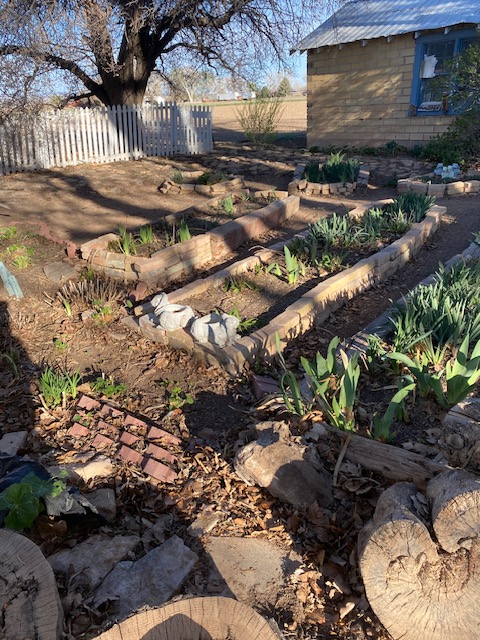
Such a huge delight! For the earth, the plants, and ME!!
Your friend on a western Colorado farm,
Linda
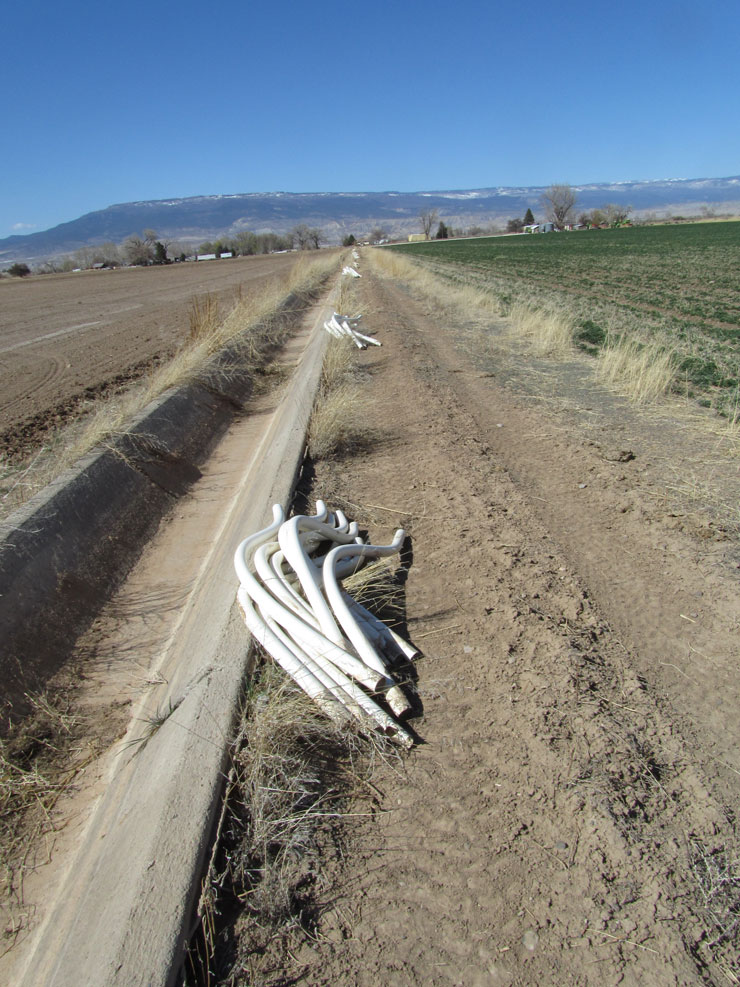
First I dug all the siphon tubes out the ditches, while Terry marked out the fields
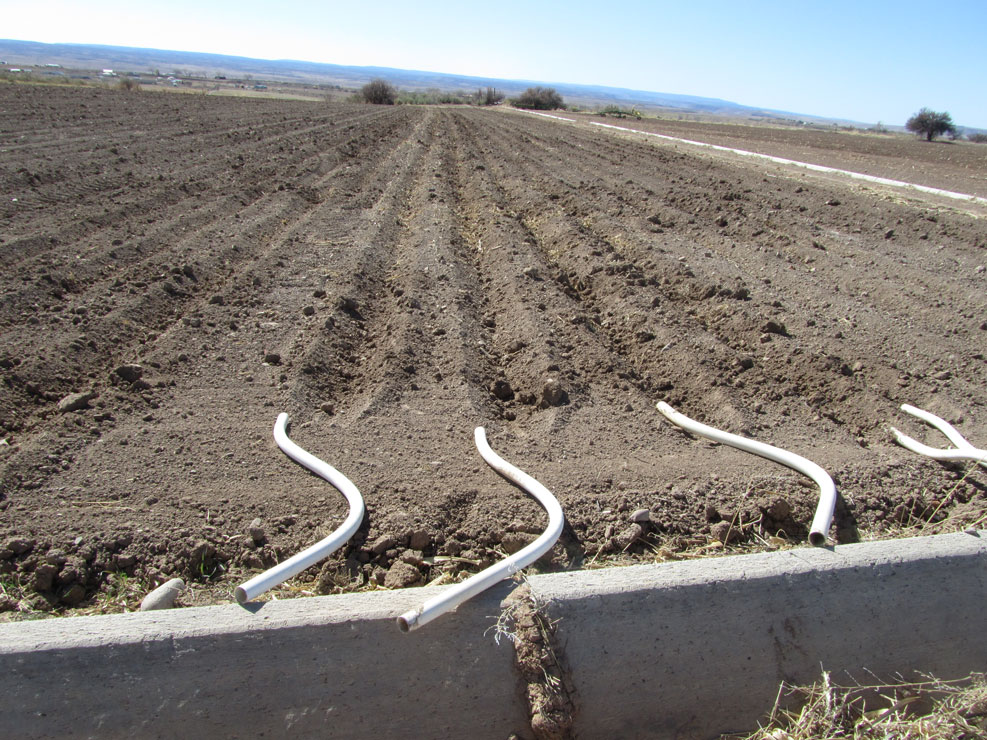
Then I started placing them in the exact spot where they will spend the rest of the farming season.

Then we

Began!
Water in the furrows!
YAY!
Your friend on a western Colorado farm,
Linda

We are still irrigating the corn…
(early photo showing the ripening of the corn)
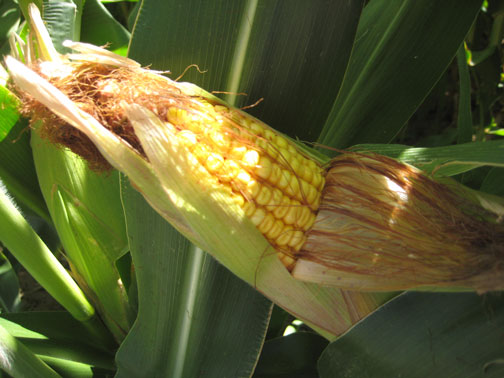
it is slowly starting to dent. See the little lines in the kernels, that is the dent.
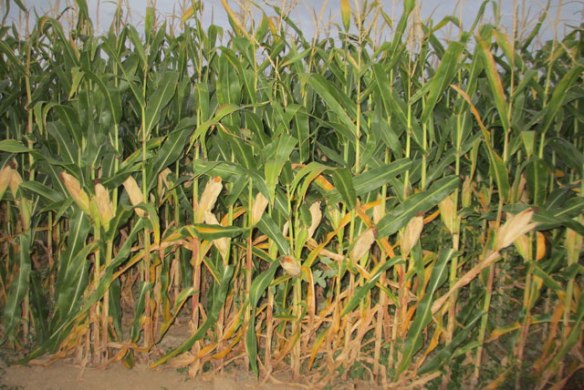
Once completely dented, the shucks will dry out. (Earlier photo of the shucks being dry)
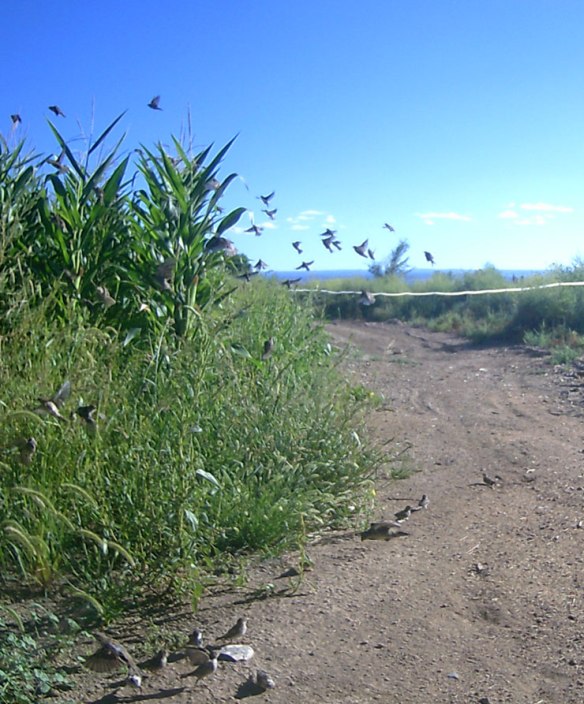
So, until the corn is all dented and the shucks show dry, we keep the water flowing.
Soon, though, soon. We will be done with the irrigation of the corn for the year.
Your friend on a western Colorado farm,
Linda
Mom and Dad lift up all the siphon tubes out of the ditches, fork out all the trash

Before 7:00 in the morning, Dad calls the Uncompaghre Valley Water Users ditch rider. Our ditch rider rides for the FN Lateral. That is the canal from which we get the water that goes to our place.
Our headgate has its own number and everything. And our farm, just like every farm within the Uncompaghre Valley Water Users area, has its own share of water. This water was decided way back in 1902 — every farm gets its number of shares forever and ever and ever. And that farmer (owner of the farm) must pay for the shares…they are not a freebie. Just so you know, Mom and Dad say the cost of the water for each farm is more than the taxes on each farm. Water is an expensive part of farming.
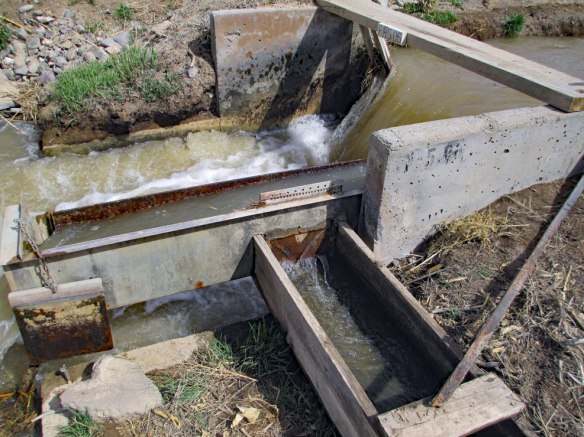
Once at the headgate he lifts up the dam stopping the water from going into our farm.
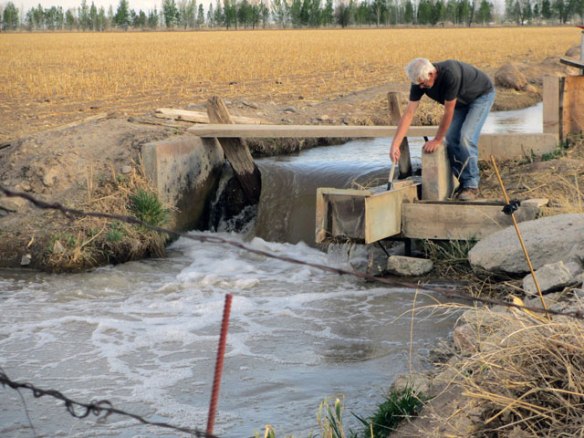
After Dad talks to the ditch rider, he heads up to the headgate, opens the dam the amount the ditch rider says he can have (yes, sometimes you don’t get the 100% you pay for, sometimes you only get a percentage—it all depends on the snowmelt.)
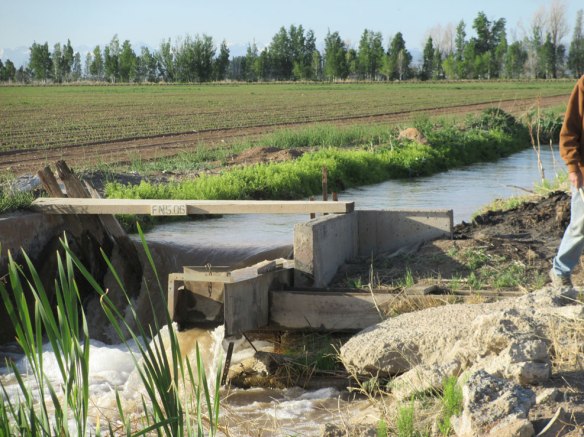
The amount of water Dad can have, leaves the canal and heads onto the place—at that point Mom and Dad scoop trash out the ditches, so the trash cleaners don’t get over-whelmed.

Then they move to the first field they are starting the water on.
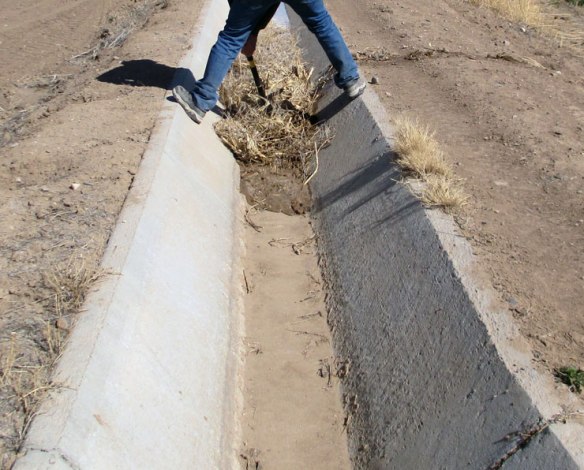
This goes on from the first day in April when the headgate is first opened until the last day in September when Dad decides the crops are finished taking in water.

Twice or more times a day…
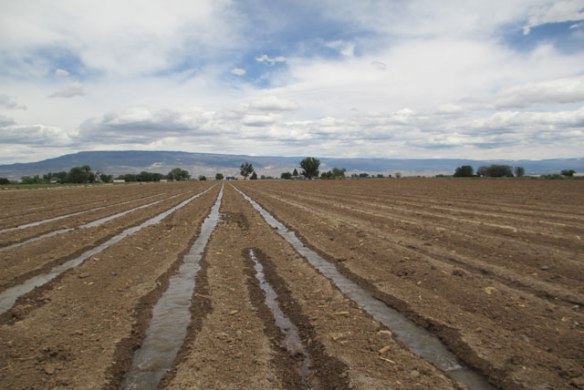
Mom and Dad go out, check the trash,

check the furrows to make sure they are not trashed up,
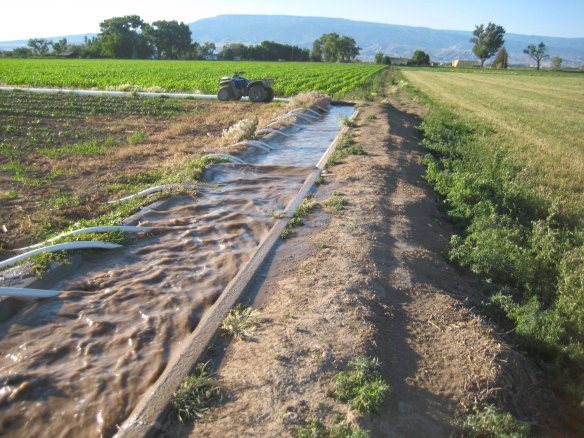
and move the water to the next furrows on and on and on.

Step Three will tell you more. In detail. I think.

TLC Cai-Cai
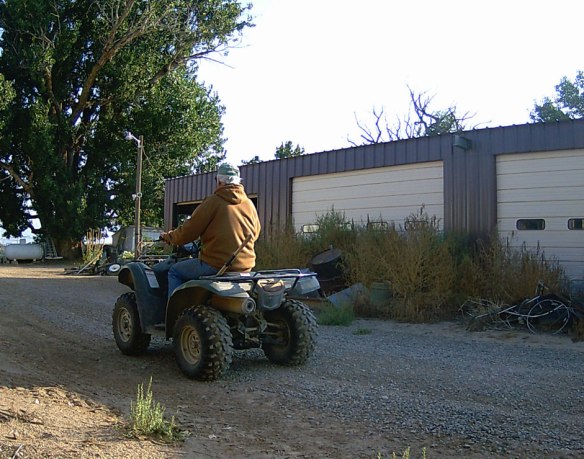
It’s turned decidedly cool now
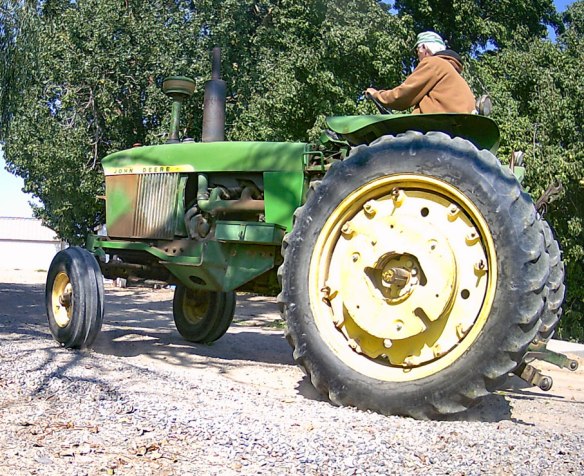
In the early mornings
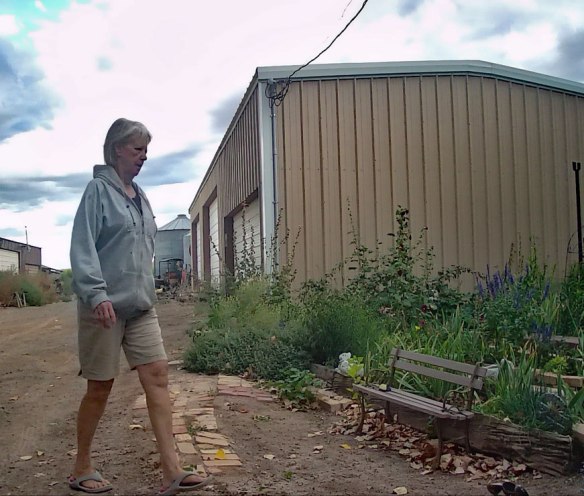
Jacket wearing cool.
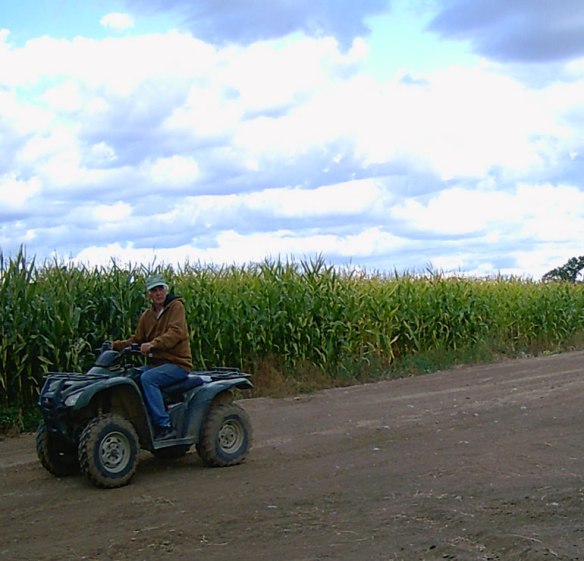
Terry is saying:
we are about to come to the end

Of the irrigation season.

Soon.

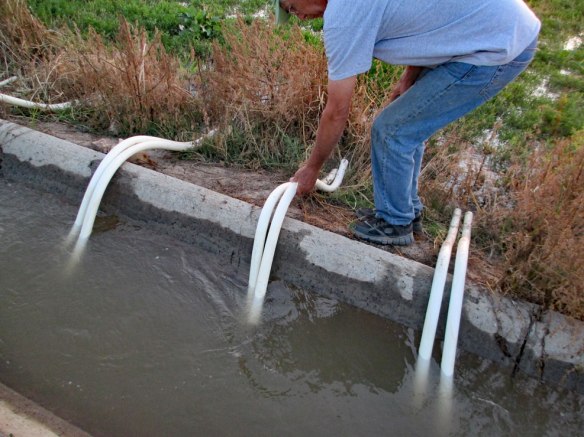
So until that moment, I will enjoy the sun on the water as the last fields are irrigated.
Your friend on a western Colorado farm,
Linda

Smoke still fills the sky, day and night, night and day…and the heat wears on and on and on…Wednesday we hit 104*f ( 40c)

But, in spite of all that
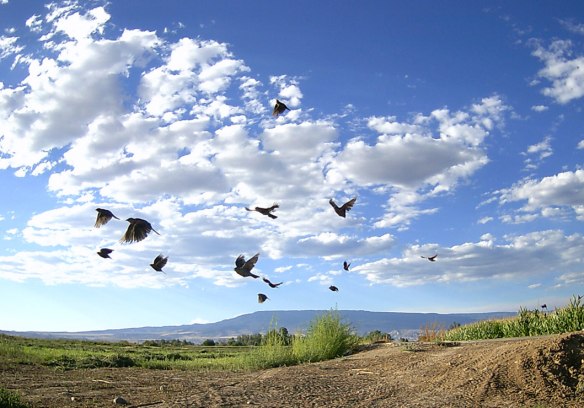
Fall is in the air. Yes, I know it’s still August, but the signs are still there

The Rabbit Brush is blooming…three weeks early
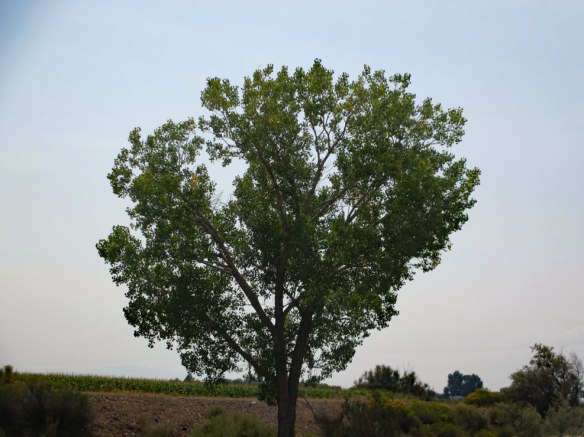
The trees are starting to lighten up, with bits of yellow poking through here and there
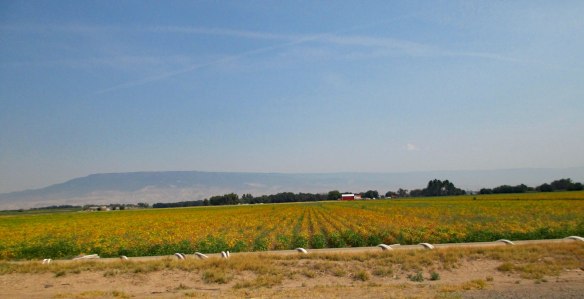
The pinto beans are turning yellow. Once all the plants are yellow the pinto bean harvest will begin.
The daylight is shrinking (sob)

The corn is starting to dent
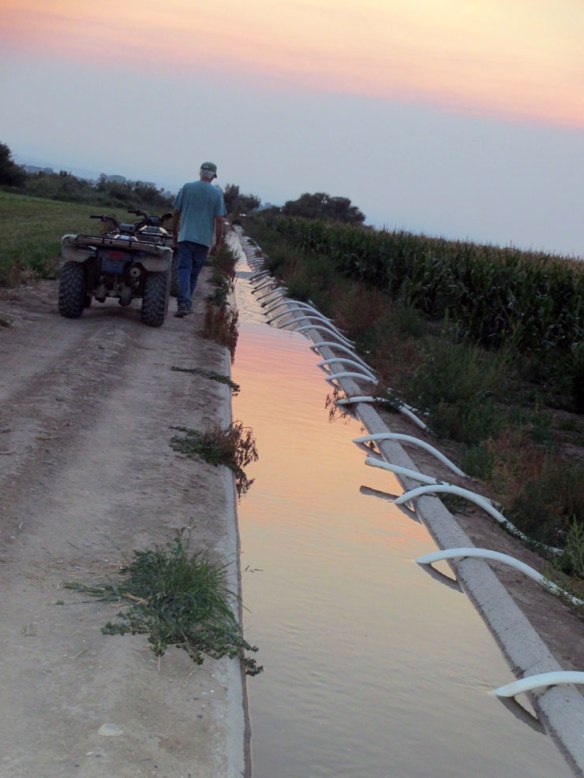
Although we are still irrigating. Once the corn is totally dented the water for the corn will stop. There will not be a reason to keep the water on the corn; the plant stops taking in the water, the seeds are now made.

The only thing we will keep irrigating will be the three alfalfa fields. Those we keep irrigating until sometime in October.
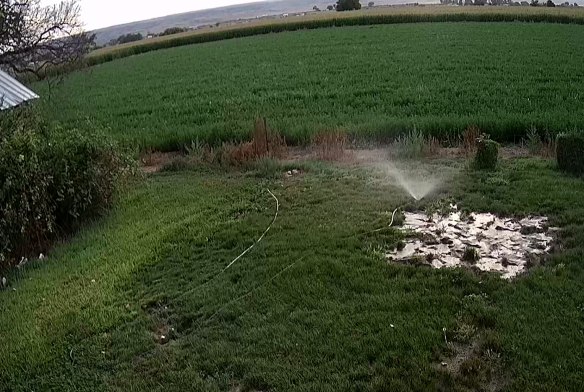
For you never want alfalfa to go into the winter thirsty if you do…you won’t have a field next spring.

Yes, Fall is in the air, (although this reluctant to break heat, would have a person think differently), 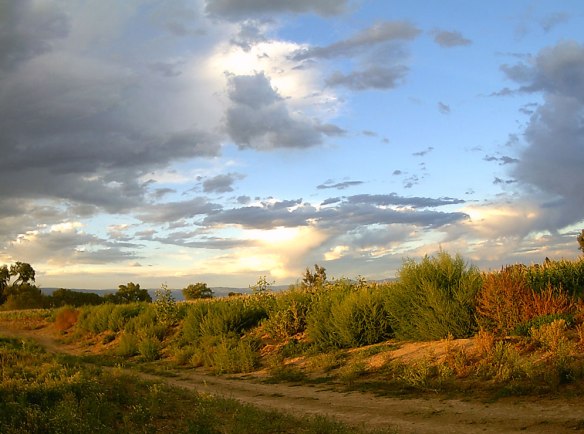
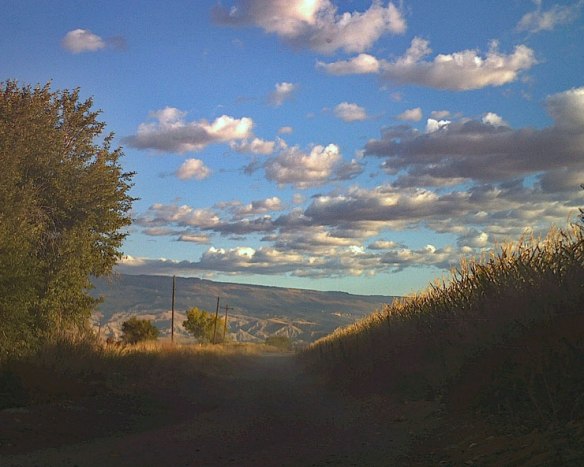
even the light has changed.
Your friend on a western Colorado farm,
Linda
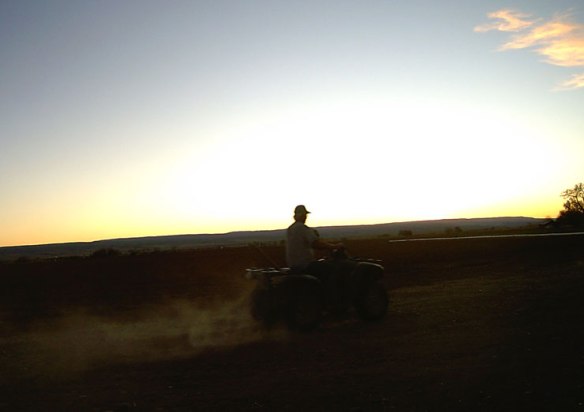
In the early morning light —first thing first is the changing of the irrigation water

The last field of corn Terry finished Mormon creasing….(knocking down the dirt over the tops of the little seeds trying to push their way through the soil)
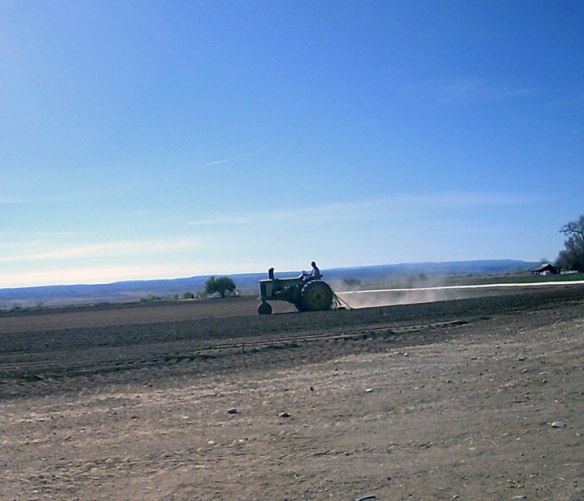
Since the first field has popped up it won’t be long before this field is covered with little green baby corn

In just two or three days’ time! Isn’t nature amazing?
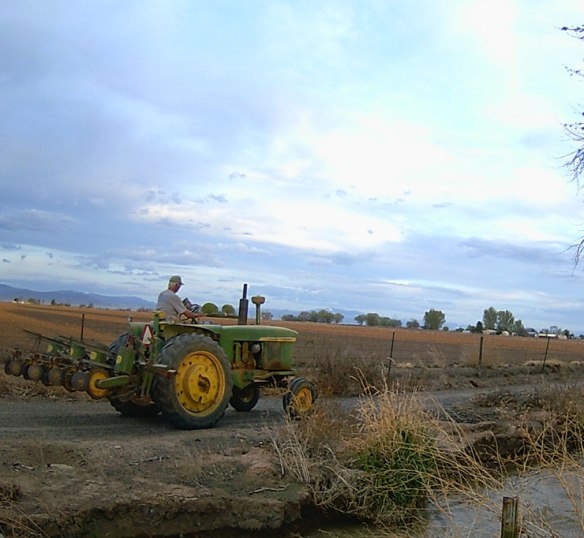
Everything planted now but one field. Just one. And that one will be after the first cutting of hay
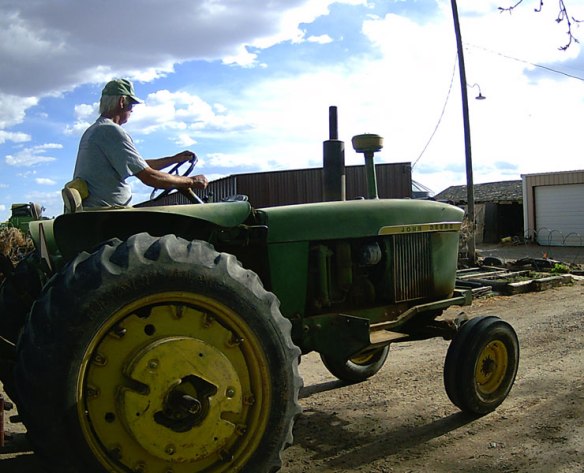
Step-by-step the hours’ pass
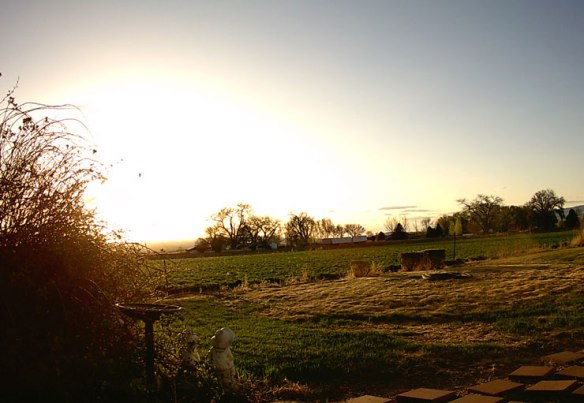
Moving out of late winter, (when nothing seems to happen and life can be a tedious routine) on we go into early spring; one task leading into another task, now we are in the middle of Spring
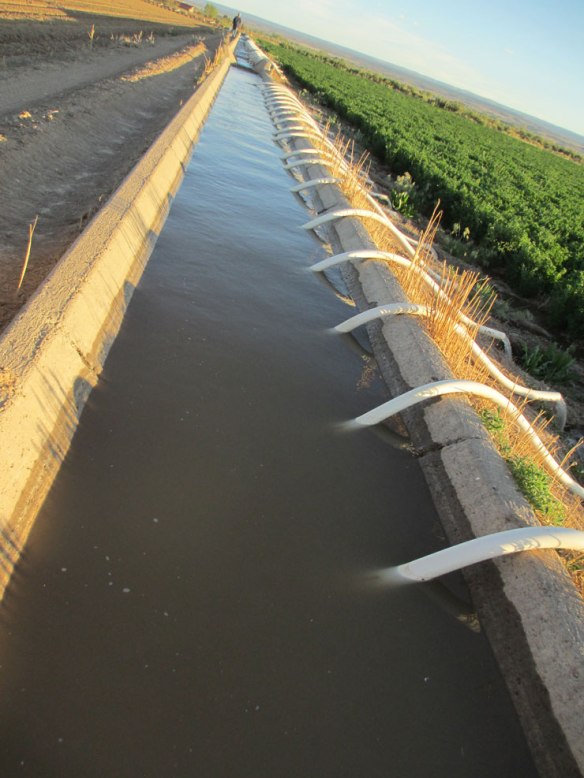
With irrigation the constant motion of farm, crops and for the farmer(s) 🙂
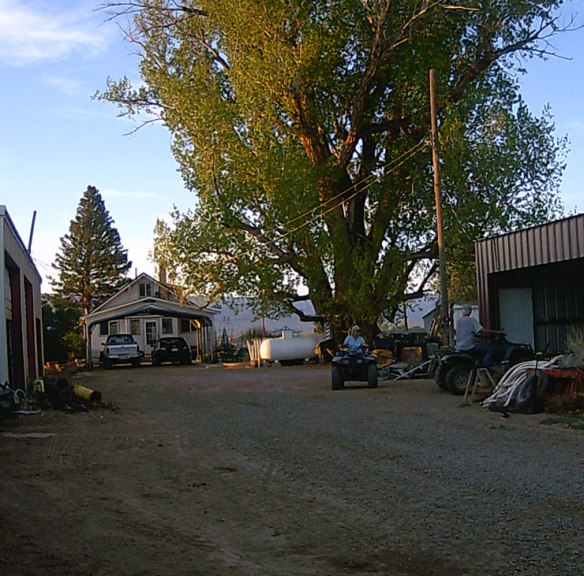
Forward into each day–all steps ordered, giving a lightness and freedom to each of us

Perhaps, God—yours and mine and all of ours—whispering loudly for all to hear
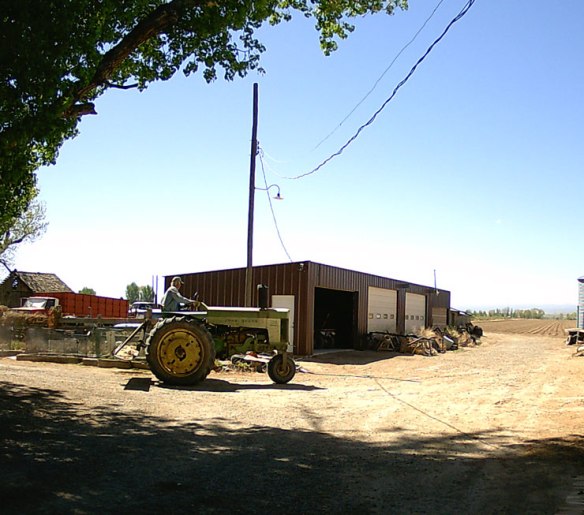
Life is Good, Sing Loudly to the Heavens so all can hear!

From my heart to your world,
Linda

For those who are interested, and have asked to know more; to understand our irrigation system

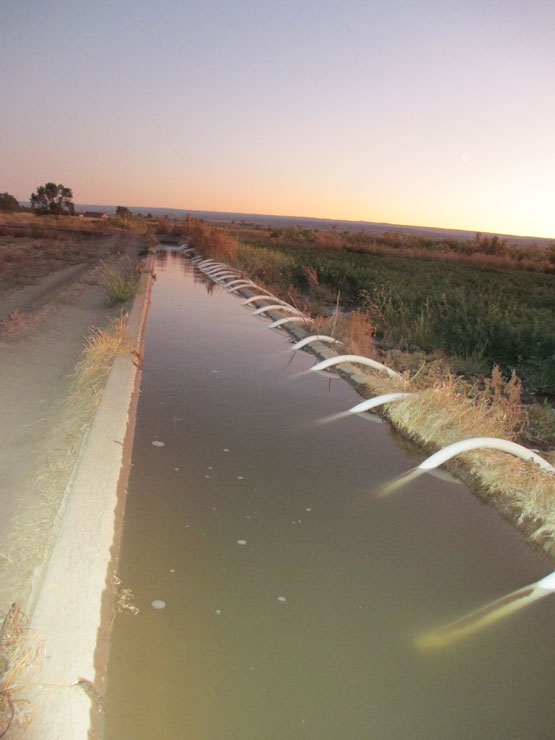
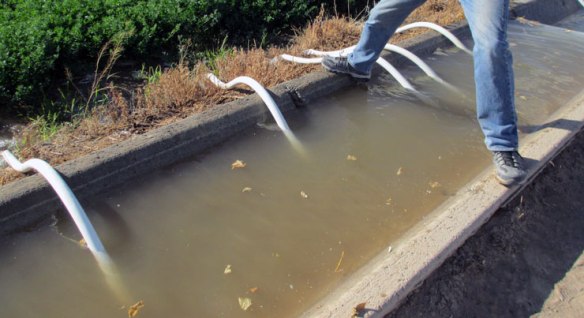
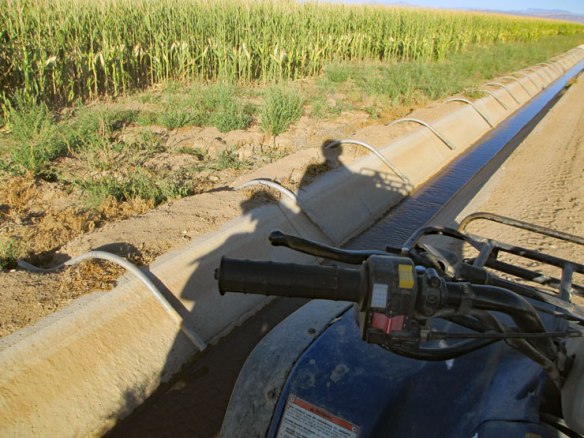
This is a wee blog post about the dams…see those straight lines in the cement ditch. Those are wedge-shaped dams…blocking up the murmuring water so the siphon tubes can be dipped into the water and quickly flung over the side (going downhill) to start sucking out the water and into the fields.

Terry does a complicated sort-of insert on some of the dams (see the one closest to us) half tipped up straight, one side down crooked. This allows the water to fill up and spill over so the next set of tubes has enough water to siphon.
As you can see we haven’t set the tubes closest to us yet. We are waiting for the water to fill back up to the ‘wet’ line. Then we will set the tubes
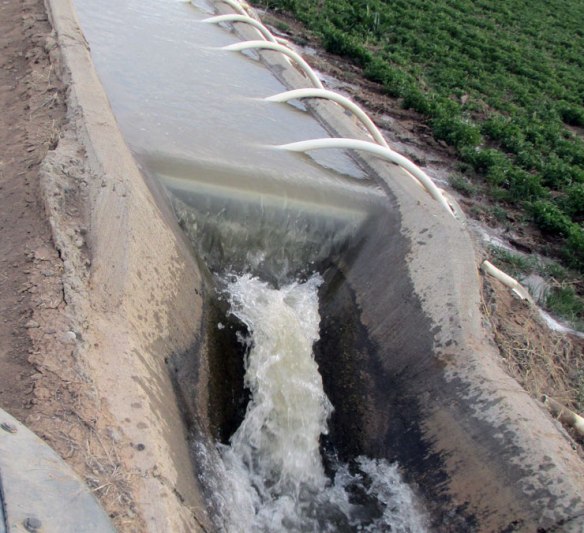
Here is the very last dam…we are allowing the aggressive water to flow over in a mini-waterfall

so the next field can have enough water we can set tubes in it. You can see the dam way, way down there. It will stop the water and start it to back up and start filling up the cement ditch

Once it gets full enough (and before it spills over the side) we will set the siphon tubes. The cornfields require two tubes per furrow, skipping a furrow,

while in the alfalfa we set one tube in each and every furrow

Each furrow must have the top dug out by hand so the tube can set in the perfect little slot and the water rushing and tumbling down the furrows STAYS IN the FURROW it’s supposed to be in.

Here you see the result—goals accomplished—in one of the corn fields. Water making it all the way to end and subbing across so everything is nice and wet. Once this ground dries out to the proper moisture…Terry will plant corn.

There you have it… a tiny wee blog post about dams (and water, and furrows, and siphon tubes); the heartbeat of farming in the high mountain desert of western Colorado :)!
Your friend on a western Colorado farm,
Linda

This morning we finished up all the irrigation on the farm.
All the pastures are wet, all the alfalfa fields, and my lawn
I got all my hose picked up and stored for that long winter season
I cleaned out the woodstove and readied the kindling and logs for that time when neither Terry or I can’t handle the cold house anymore
A major winter blast is heading our way. The weather people say Thursday the daily high will be 49* —Winter is coming, just on the edge of sight. Floating in the jet stream ready to develop into reality.
Forcing us to wave warm lovely days farewell.
Your friend on a western Colorado farm,
Linda

(From Pinterest—Julianna Creations Etsy)
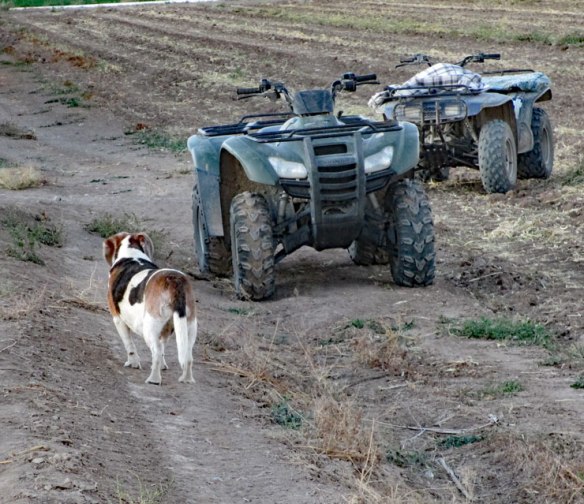
We started the water on the alfalfa fields yesterday morning

It felt good to be back out on the land, picking up siphon tubes, setting dams, digging out rows
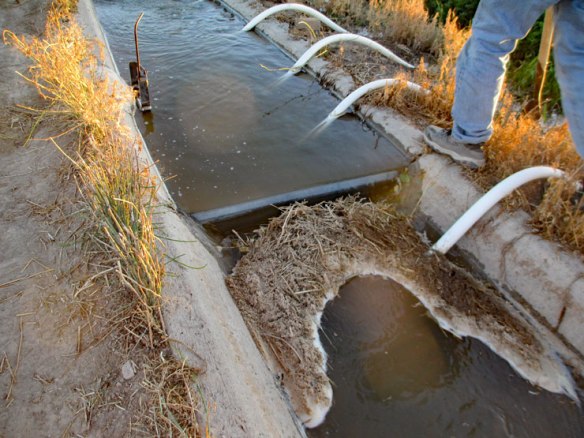
We’ve had a

tremendous amount of wind the last several days, which also brings with it trash from the harvested pinto bean fields

It truly feels good to be walking, lifting, shoveling, moving, smelling the water as it makes its way down the rows in the field, instead of an echo remembered

All of us were rejoicing/singing as we did our work.

The renters left the fields in good shape. No complaints there.
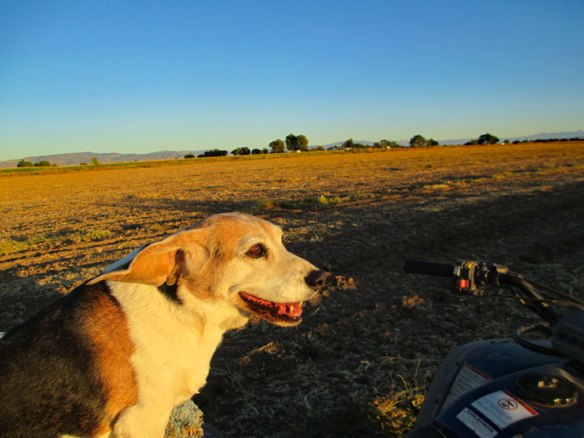
Still, it’s okay to send round and tell the neighbors, we are Back on the Land!
Your friend on a western Colorado farm,
Linda
 Life on a Colorado Farm